Get in touch with Yun-Sculpture company
Built for Estates: Custom Large Outdoor Stone Planters & Natural Marble Garden Urns

Small plastic pots are for windowsills. Large outdoor planters are for architecture.
A true estate does not decorate its landscape with temporary objects. It builds with materials that feel as permanent as the house itself. When a visitor walks up a drive or through a garden gate, the first impression is rarely the flowers. It is the structure around them.
That is where Large Outdoor Stone Planters come in.
Stone holds visual authority. Weight anchors a composition. When a planter is carved from granite, marble, or limestone, it stops behaving like a container and starts acting like a piece of landscape architecture.
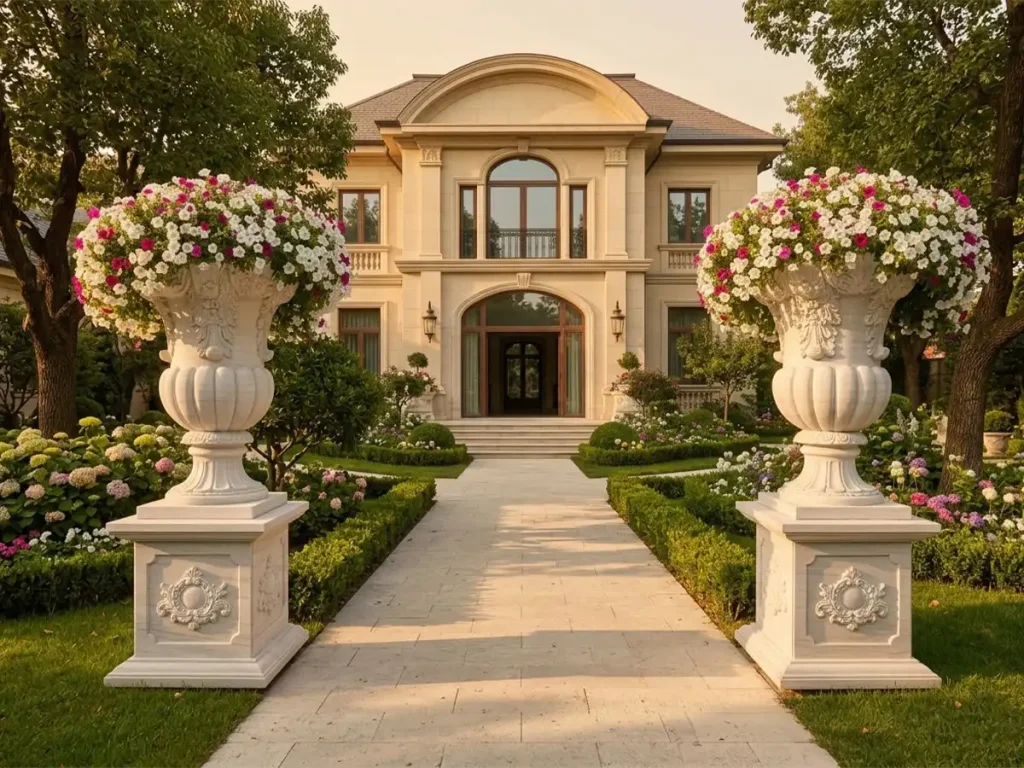
At Yun Sculpture, we treat Natural Stone Planters the same way we treat sculpture commissions. They are not seasonal décor. They are Legacy pieces designed to outlive the buildings they sit beside.
A properly proportioned planter balances scale. It can frame a staircase, command the center of a courtyard, or define the entrance to a long garden path.
In estates, luxury resorts, and historic homes, these Large Outdoor Stone Planters function as visual anchors. They guide the eye and establish symmetry. They create rhythm before a single plant is even added.
Durability is the second reason estates invest in stone. Plastic fades. Fiberglass cracks. Thin metal warps in summer heat. Solid stone and cast iron simply age.
They weather. They patinate. They grow more convincing with time.
A well-made planter should still stand exactly where you installed it twenty years later.
That is not decoration. That is architecture.
Table of Contents
Table of Contents
Classic Elegance
Stone Planters and Urns for Grand Entrances
Every landscape has a moment of arrival.
It might be the front gate, the base of a staircase, or the beginning of a garden path. In spatial design, these transition points require structure. Without it, the entrance feels empty.
This is where Stone Planters and Urns excel.
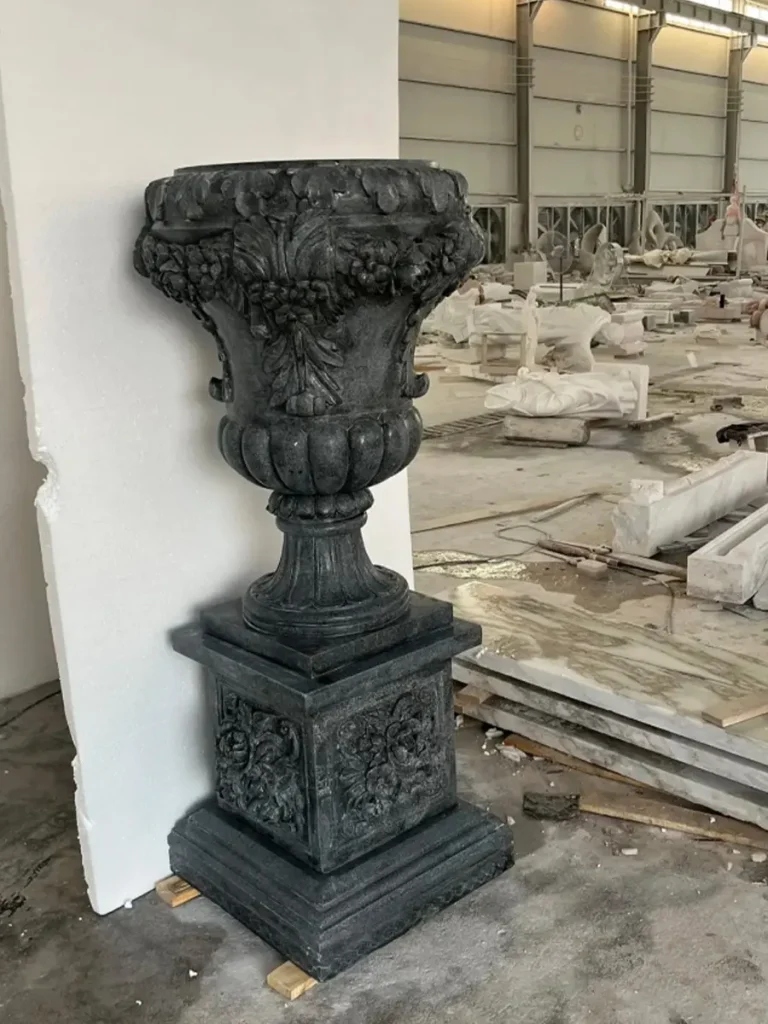
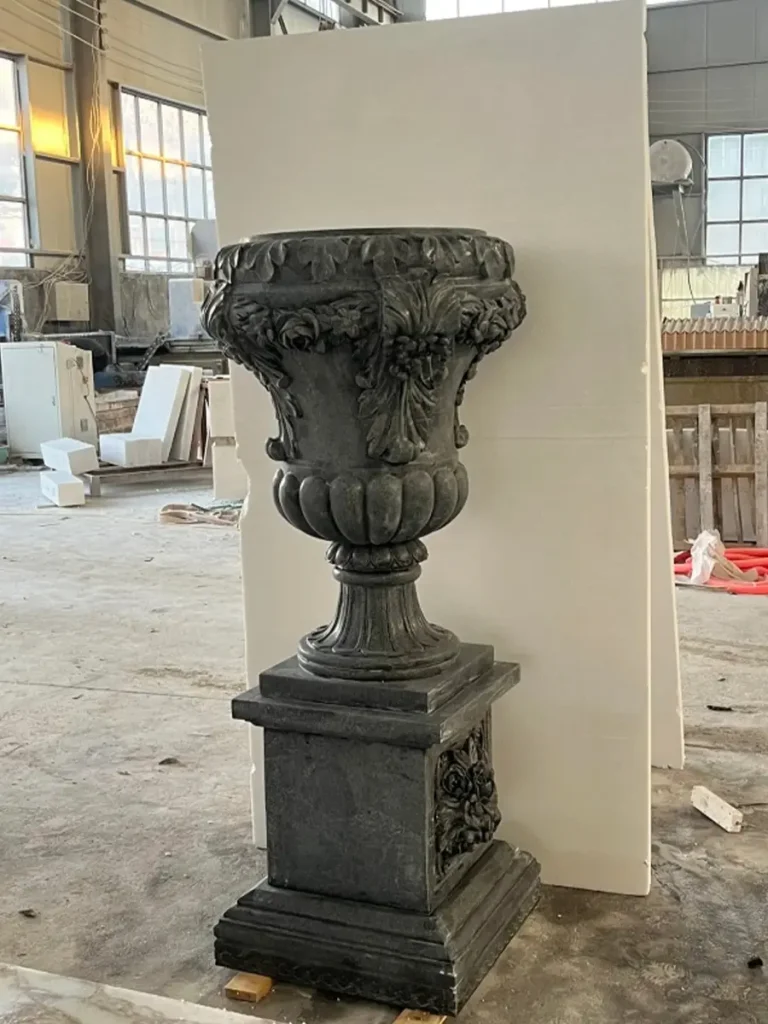
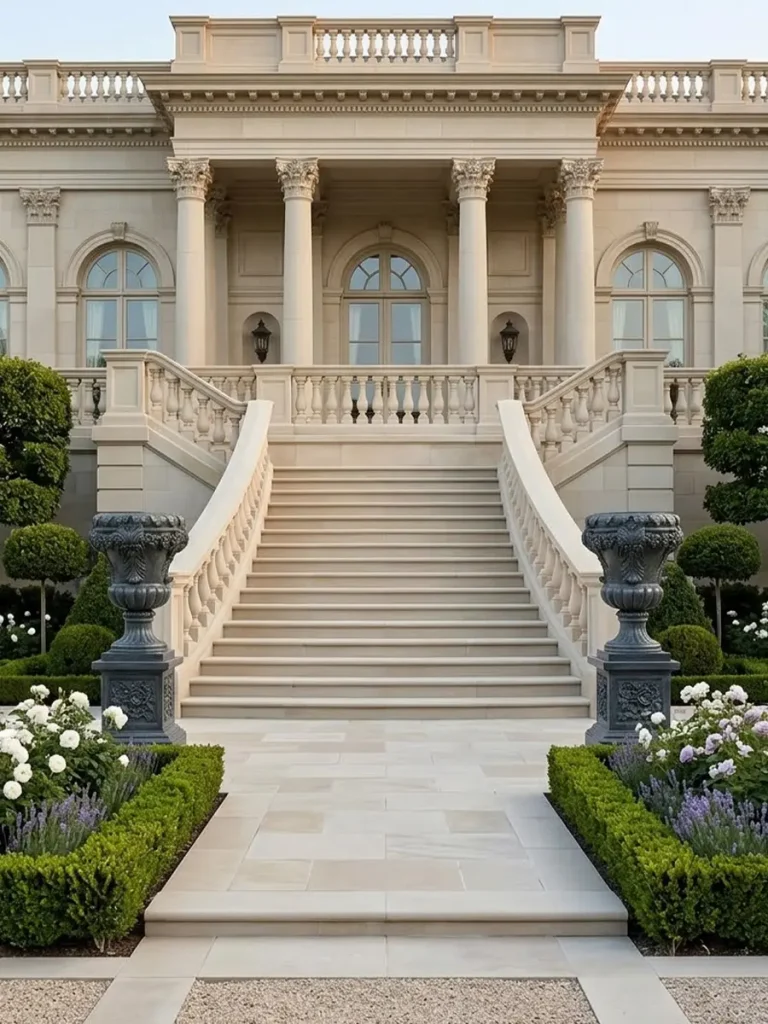
A pair of large urns creates symmetry instantly. The eye understands the threshold before a person even steps through it. Two forms standing guard quietly announce that you are entering a designed space.
Large planters also provide vertical balance. When positioned beside doors, columns, or gates, they extend the architectural language outward into the garden.
This technique has been used for centuries in European estates. From Italian villas to English country homes, Garden urns have always been tools for spatial framing.
Plants soften the stone, but the stone defines the composition.
The Historic Weight of the Cast Iron Urn Planter
Few garden objects carry as much historical authority as the Cast iron urn planter.
During the nineteenth century, cast iron became the material of choice for formal gardens. Foundries produced elaborate designs filled with scrolls, acanthus leaves, and classical motifs.
The result was both decorative and extremely durable.
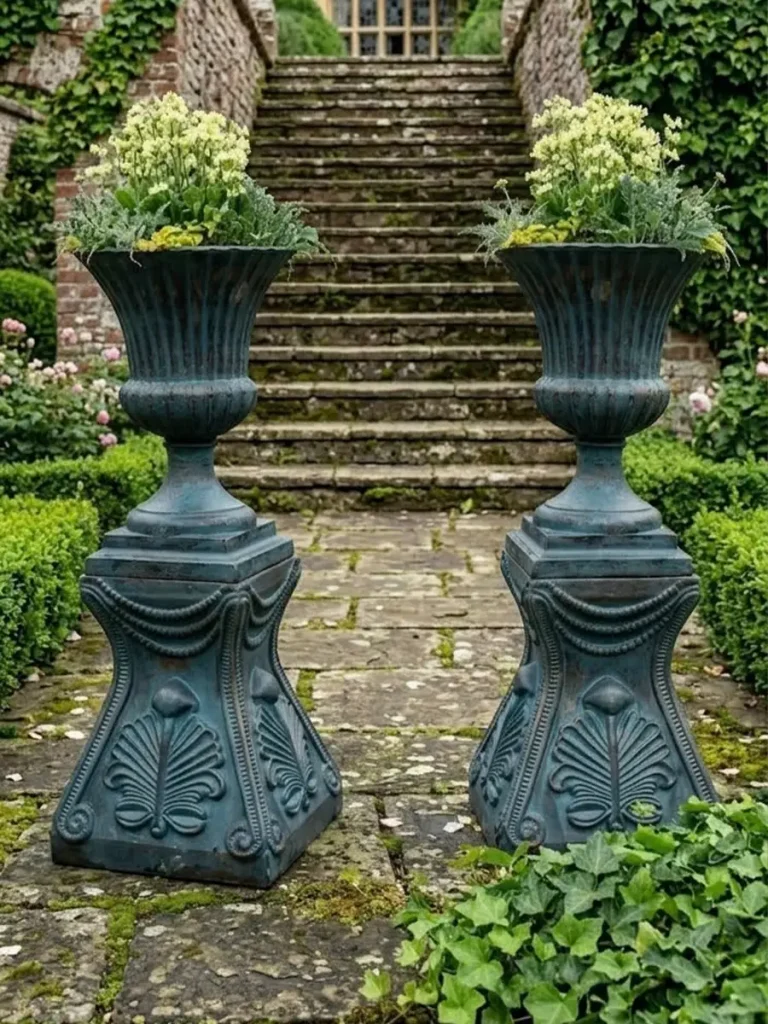
An Antique cast iron urn planter can weigh hundreds of pounds. That mass is not a disadvantage. It is the reason these pieces became iconic in grand landscapes.
Wind does not move them.
Large storms do not tip them.
Once installed, they remain exactly where the designer intended.
This stability made cast iron urns perfect for terraces, staircases, and exposed garden axes. Even in open landscapes, they stand firmly in place.
The material also develops a deep, beautiful patina over time. Layers of oxidation and paint wear create the authentic character associated with a Victorian garden aesthetic.
Modern reproductions often attempt to imitate this look. But genuine cast iron, especially older pieces, carries a depth that only decades of weather can produce.
For estate landscapes seeking historical authenticity, cast iron remains one of the most powerful choices available.
Hand-Carved Marble Garden Urns: A Palace in Your Backyard
If cast iron represents Victorian gardens, marble represents palaces.
A Marble garden urn has a completely different presence. Instead of industrial strength, it offers sculptural elegance.
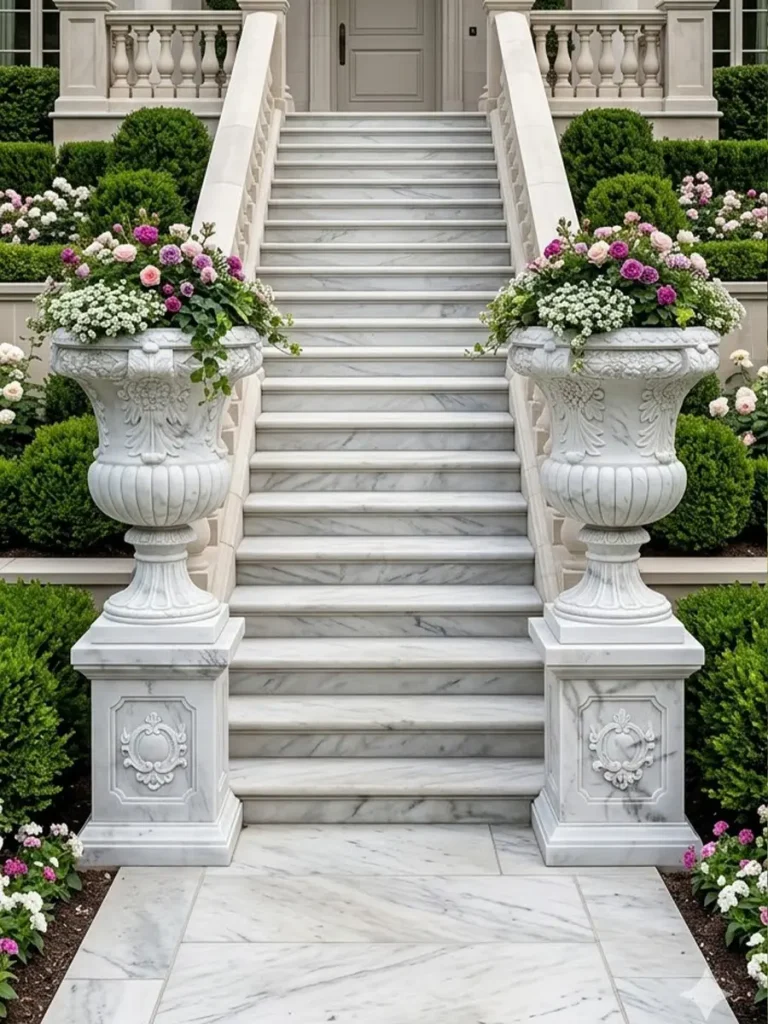
Every curve is carved by hand.
The lip of the urn, the fluted body, the decorative handles—each detail requires careful chiseling. Skilled artisans spend hours refining the profile until the proportions feel balanced from every viewing angle.
That craftsmanship is why historic estates still preserve their Old stone planters centuries after installation.
Stone ages gracefully. Marble surfaces soften slightly as rain and air polish them over decades. Instead of deteriorating, they acquire depth and character.
No two pieces ever look identical.
Collectors often seek Unique stone planters specifically for this reason. Subtle differences in veining, carving style, and proportions turn each urn into an individual object rather than a mass-produced container.
Placed along a staircase, beside a reflecting pool, or at the center of a courtyard, a marble urn introduces a level of refinement rarely achieved by modern materials.
It does not compete with architecture.
It completes it.
Pro Tip: Elevate with Cast Iron Urns and Pedestals
Many homeowners make one common mistake with large urns.
They place them directly on the ground.
From a design perspective, this wastes their visual potential.
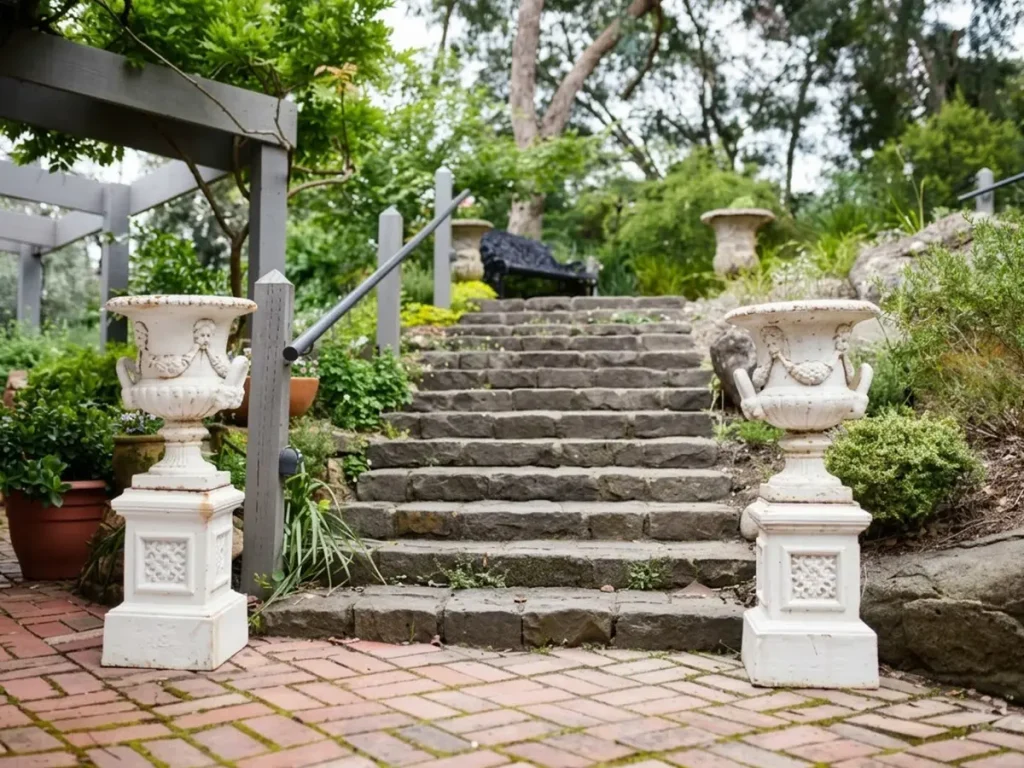

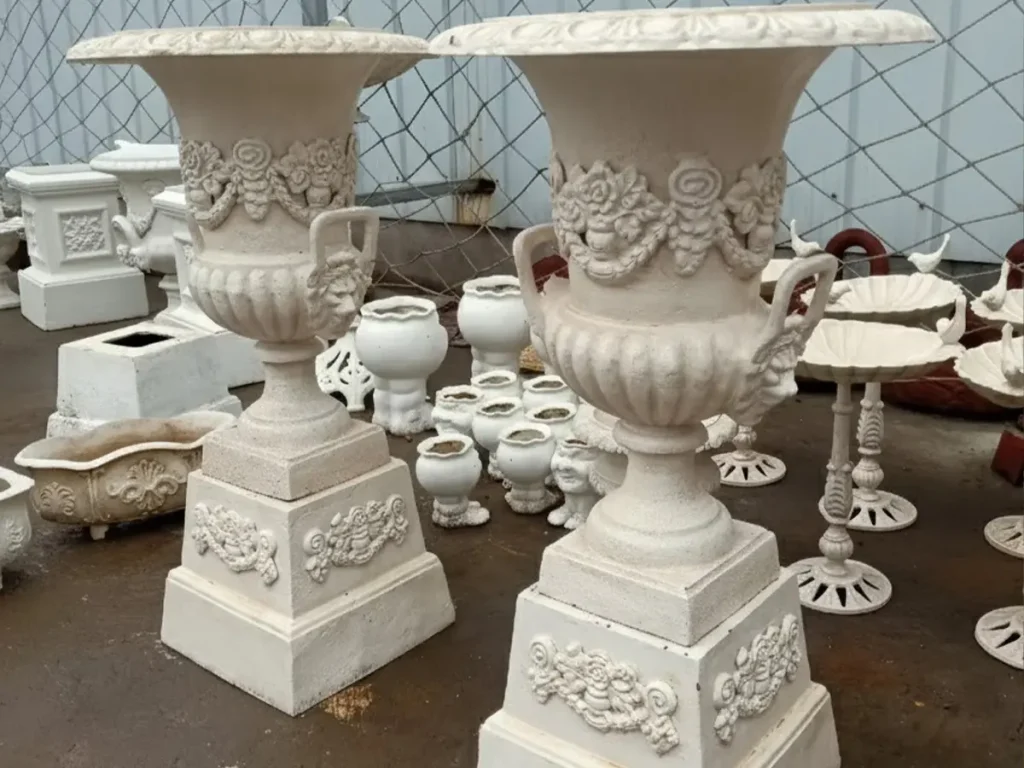
The correct solution is to use Cast Iron Urns and Pedestals together. Elevation changes everything.
When a planter becomes Pedestal-mounted, the bowl rises closer to eye level. Flowers and foliage are no longer hidden near the ground. They become part of an Eye-level display.
This simple adjustment dramatically increases visual impact.
Pedestals also strengthen symmetry. A pair of urns raised on matching bases creates powerful Grand entrance framing for doors, staircases, and gates.
The composition suddenly looks intentional and architectural.
In luxury landscape design, this technique is used constantly. The pedestal creates height, authority, and formality. Even a modest urn appears far more valuable once elevated.
The effect is subtle but unmistakable.
A planter on the ground is decoration.
A pedestal-mounted urn becomes a statement.
Modern Minimalism: Rectangular Stone Planters for Architecture
Landscape design has changed in the last twenty years.
Classical urns still belong in historic gardens, but modern architecture prefers restraint. Clean lines. Flat surfaces. Quiet materials that support the building rather than compete with it.
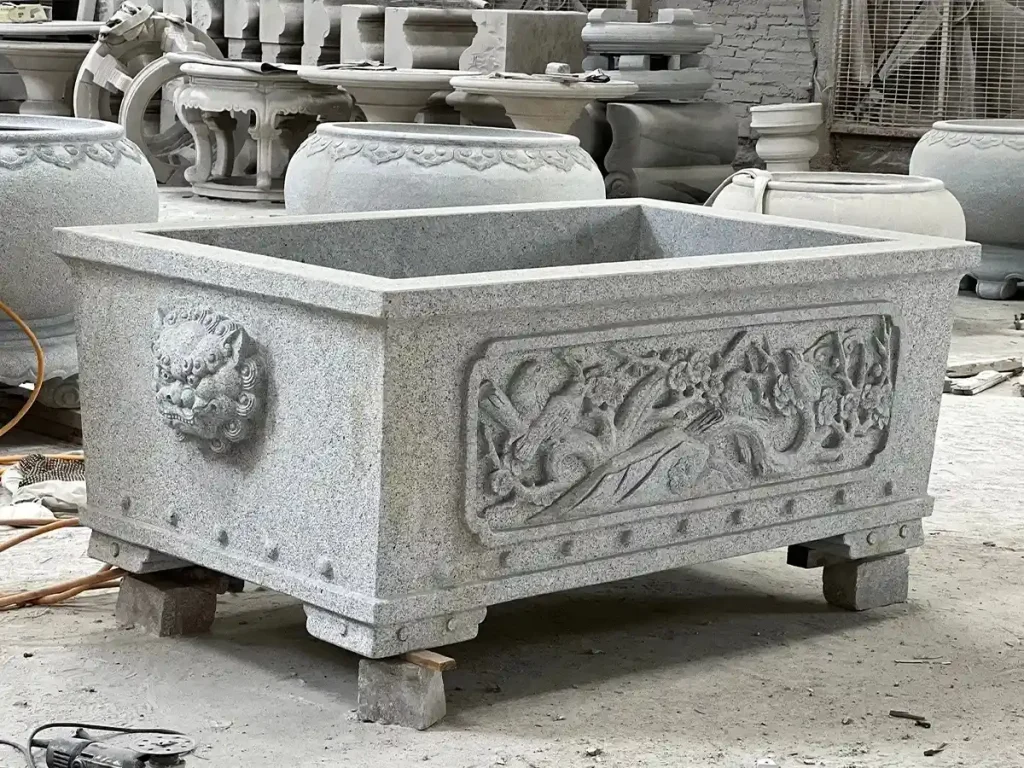
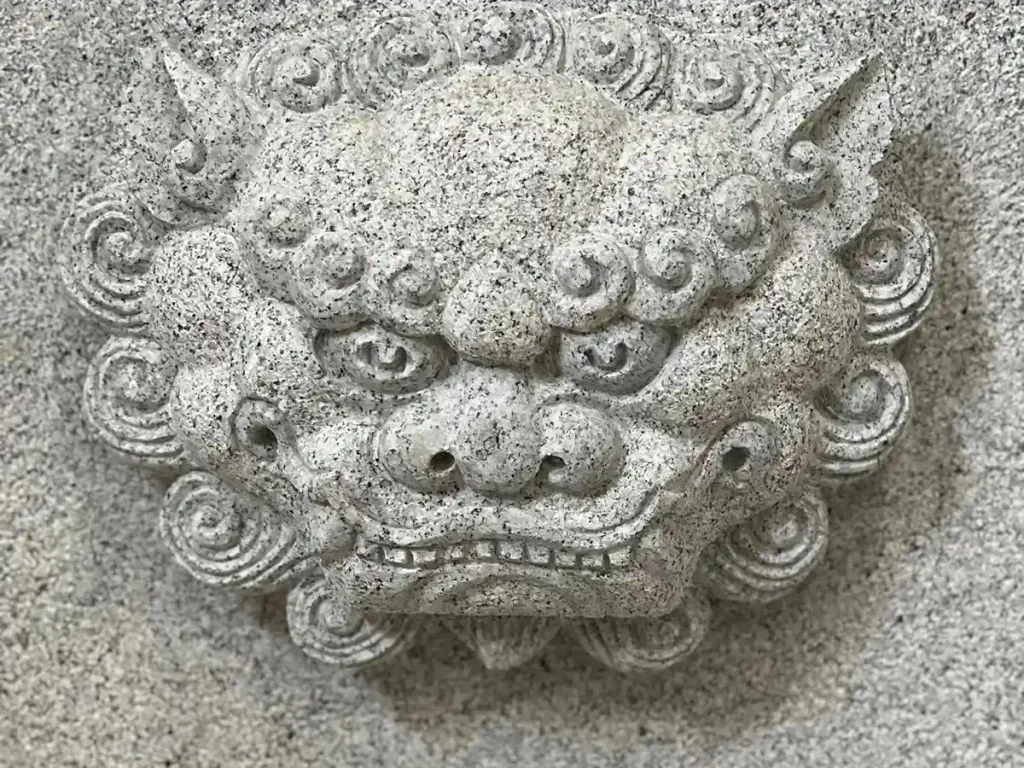
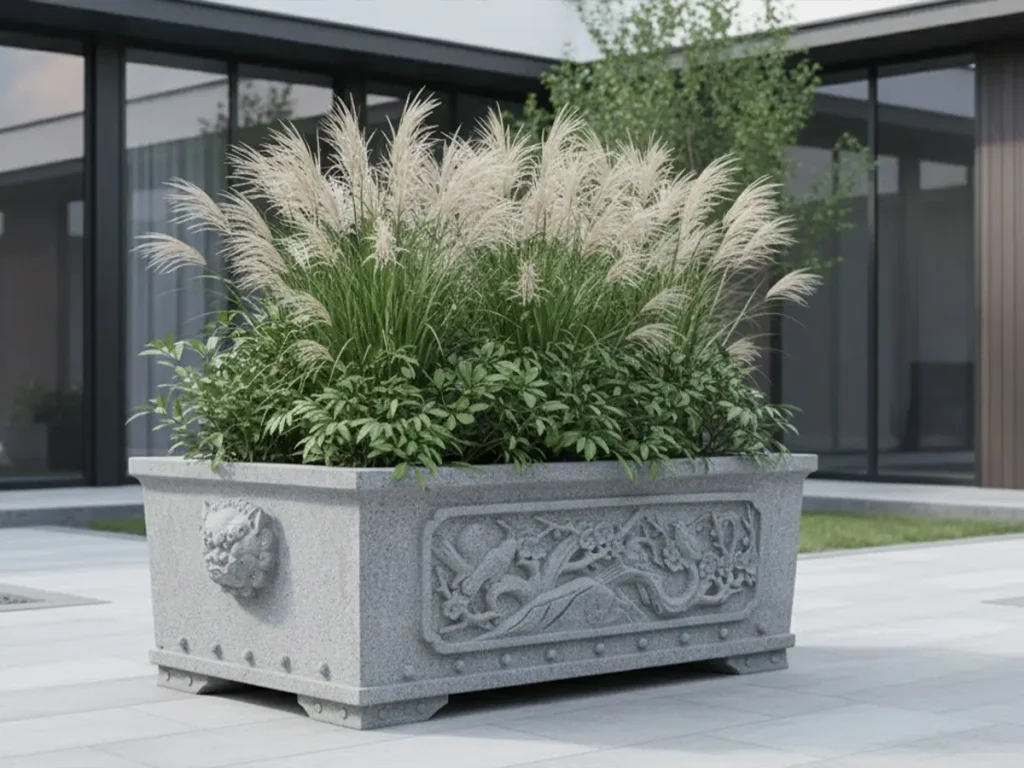
This is where Rectangular stone planters take over.
A long stone planter behaves less like decoration and more like a structural element. It defines edges, organizes movement, and introduces rhythm along walls, terraces, and walkways.
In contemporary landscapes, these planters act almost like low stone walls.
They guide people.
They frame paths.
They divide outdoor space without adding visual clutter.
The effect is subtle but extremely powerful. When used correctly, rectangular planters make an entire property feel more intentional.
Large Commercial Planters for Outdoors: Limestone & Granite
Most residential gardens use planters between 60 and 120 cm long.
Commercial projects operate on a completely different scale.

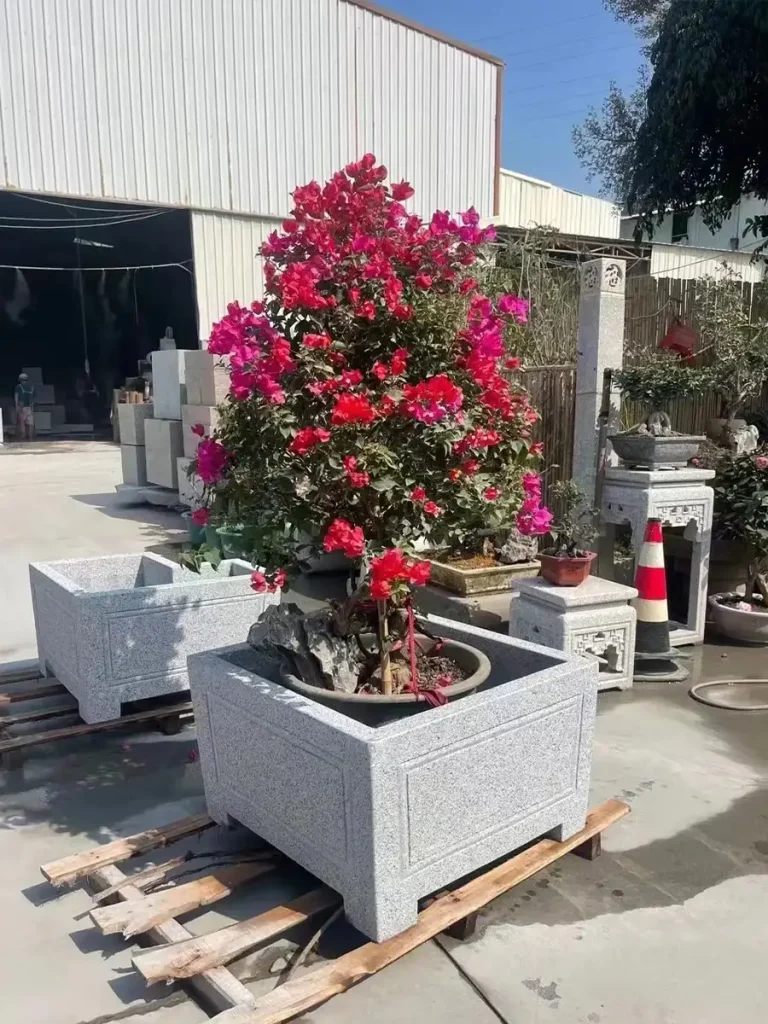
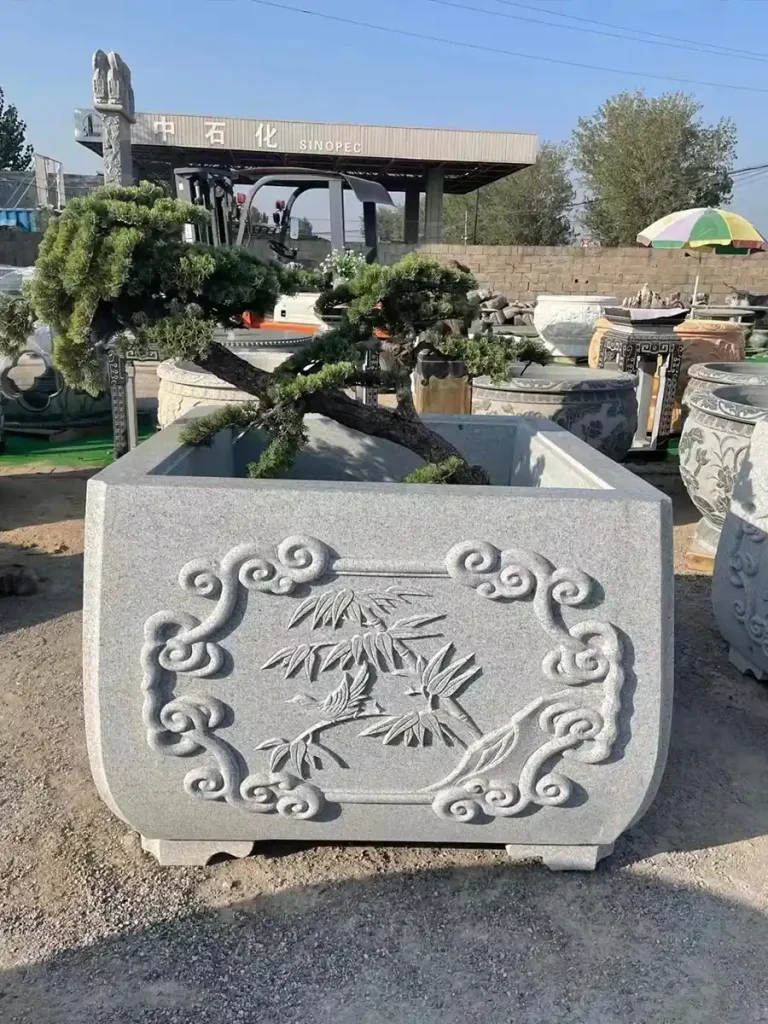
Hotels, resorts, corporate plazas, and luxury residences require Large commercial planters for outdoors that match the size of the surrounding architecture. Small containers disappear visually in these environments.
That is why architects specify Commercial size outdoor planters carved from real stone.
The two most common materials are limestone and granite.
Limestone & Granite Planters for Architecture provide a balance of durability and visual calm. Both materials carry a natural Matte texture that works beautifully with modern glass, steel, and concrete buildings.
You see them constantly in Luxury hospitality projects.
Think about the entrance of a five-star resort. The driveway arrives at a wide plaza. Walkways lead toward the lobby. Large rectangular planters line the paths.
Their job is simple: Walkway definition.
They quietly guide guests without the need for fences or barriers.
At Estate-scale, these planters often stretch several meters long. A single planter may hold a row of olive trees, ornamental grasses, or seasonal flowers.
At Yun Sculpture, we regularly fabricate Custom commercial planters for projects like this.
Typical capabilities include:
- Rectangular stone planters up to 5 meters long
- Monolithic carved blocks or multi-panel stone construction
- Integrated drainage channels
- Reinforced bases for structural stability
- Matching architectural finishes for facade integration
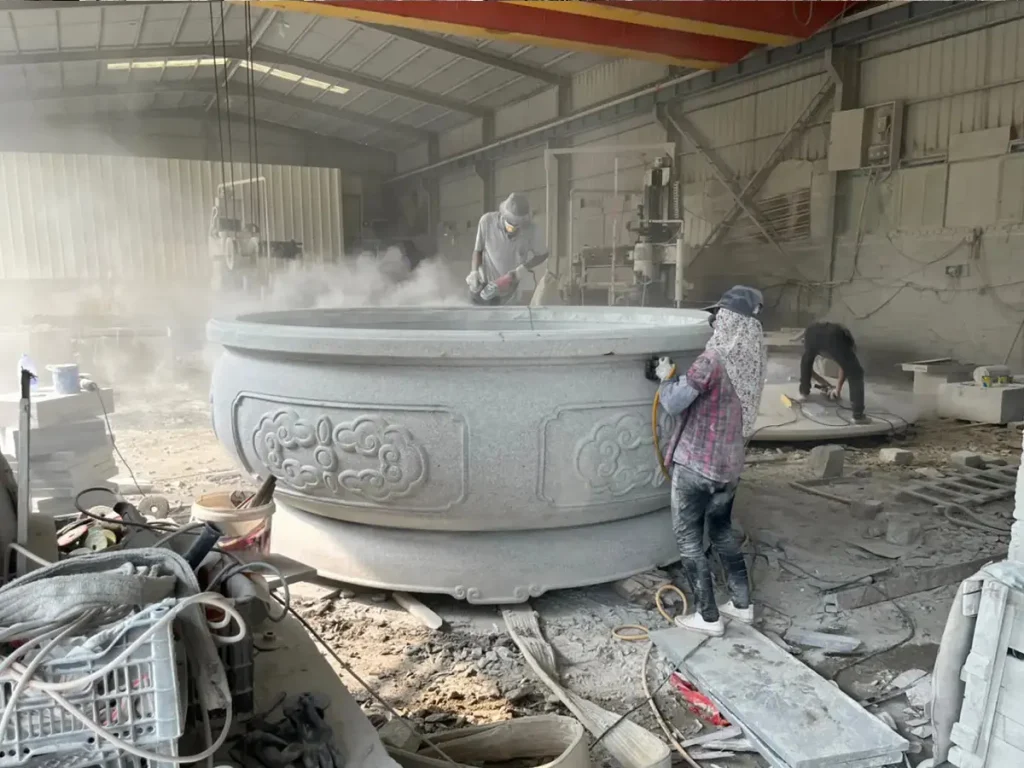
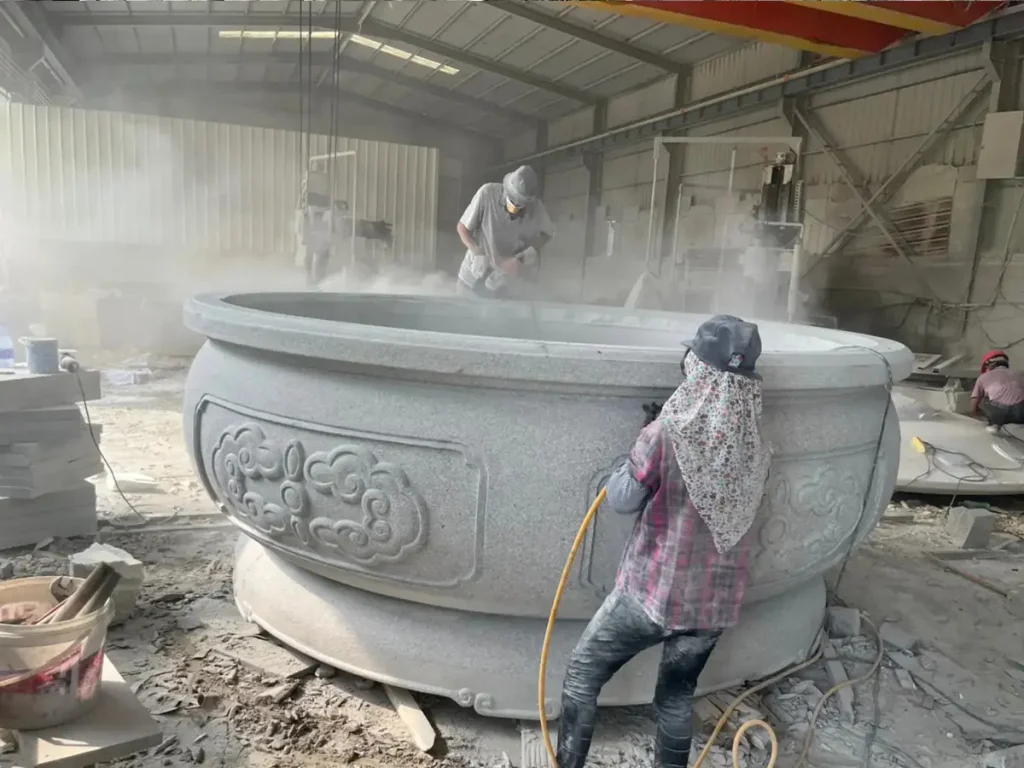
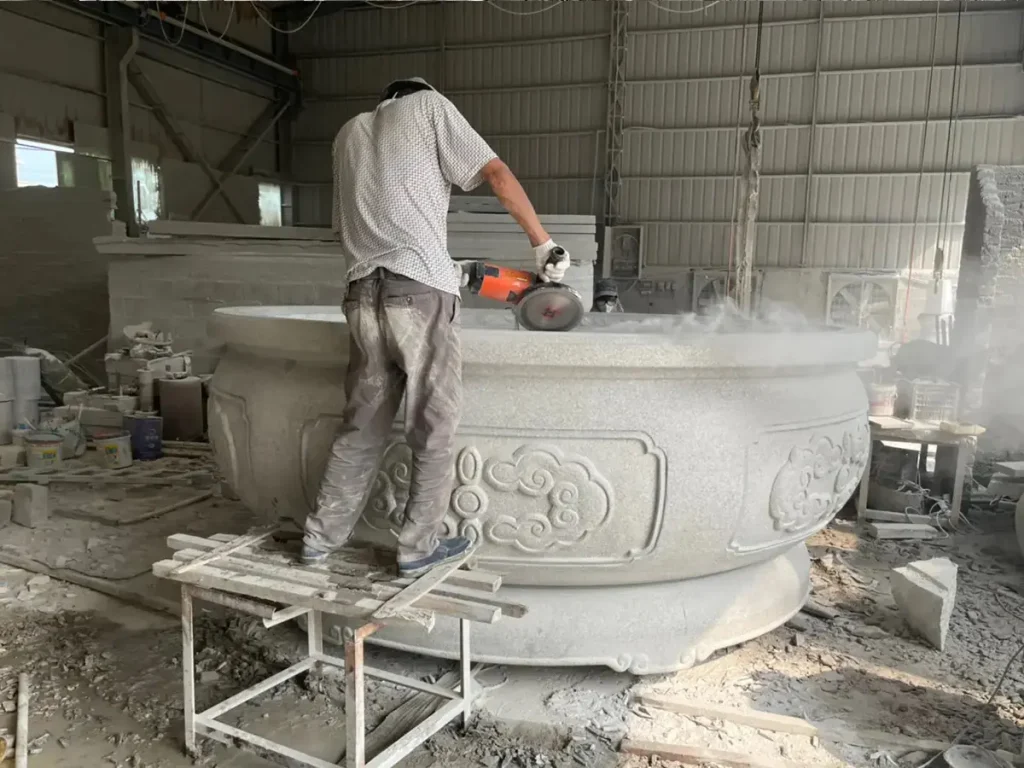
Large planters are not just containers.
They become landscape infrastructure.
When placed along terraces, hotel entrances, or long promenades, they establish rhythm and scale across the entire space.
A well-designed line of stone planters can organize an entire plaza.
The Ultimate Durability Test: Stone vs. Concrete Planters
People often ask one simple question.
Why are stone planters so expensive compared to concrete ones?
The answer is also simple.
Because they are not the same thing.
At first glance, concrete and stone may appear similar. Both are gray. Both are heavy. Both feel solid when new.
But in outdoor environments, especially over decades, their behavior is completely different.
Understanding the difference between Stone vs. Concrete Planters is one of the most important lessons in landscape durability.
The Concrete Problem: Do Concrete Planters Crack?
Let me answer the question directly.
Do concrete planters crack?
Yes.
Not sometimes. Eventually, almost always.
The reason is physics.
Concrete absorbs water. When rain enters microscopic pores inside the material, it stays there. In warm climates this causes slow erosion.
In cold climates the situation becomes worse.
When temperatures drop below freezing, the water trapped inside the concrete expands. This process—called Thermal expansion—creates internal pressure.
Over time, that pressure forms hairline fractures.
Then larger cracks.
Then structural failure.
This is why you often see concrete planters splitting along their sides after several winters.
People try to fix this problem in creative ways.
One popular internet question is: How to paint concrete planters.
The logic seems simple. Paint will seal the surface and protect the material.
Unfortunately, it does not work.
Paint sticks poorly to low-quality concrete. After a few seasons of sunlight, rain, and temperature swings, the coating begins to peel.
Soon the planter looks worse than before.
Now you have cracked concrete and peeling paint.
From a factory perspective, this is the uncomfortable truth: cheap materials always require maintenance.
Stone does not.
The Stone Advantage: Solid Rock Planters and Frost-Proof Resilience
Natural stone behaves very differently from poured concrete.
High-quality Natural stone flower pots are carved from dense geological material formed under extreme pressure over millions of years.
This density makes all the difference.
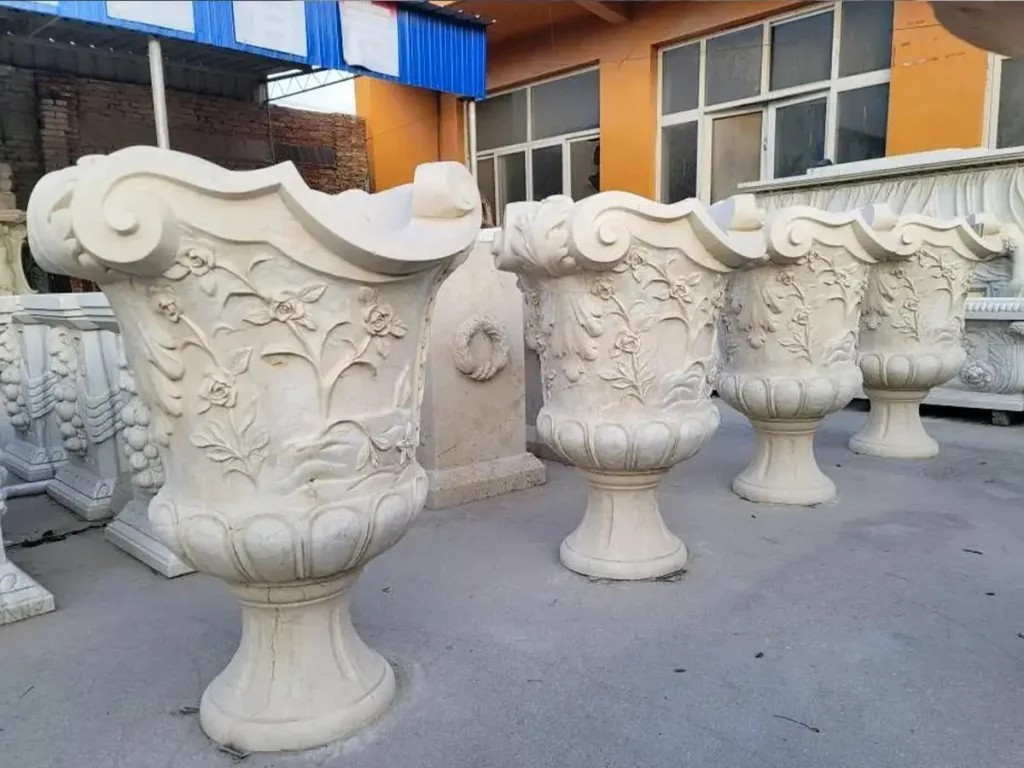
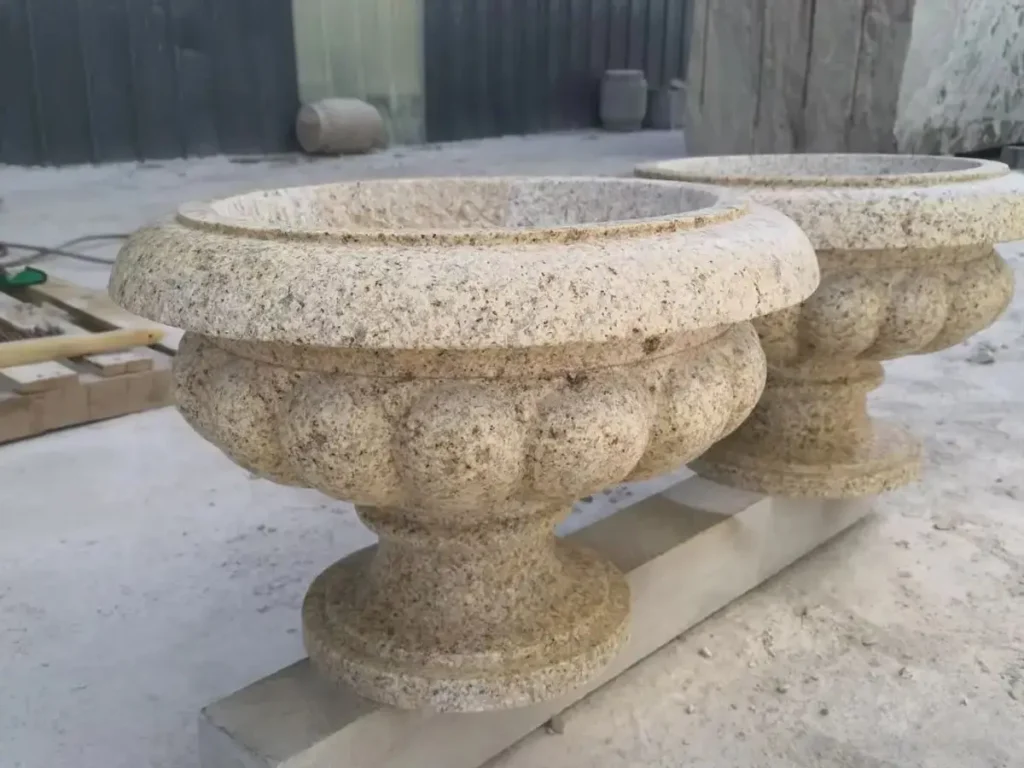
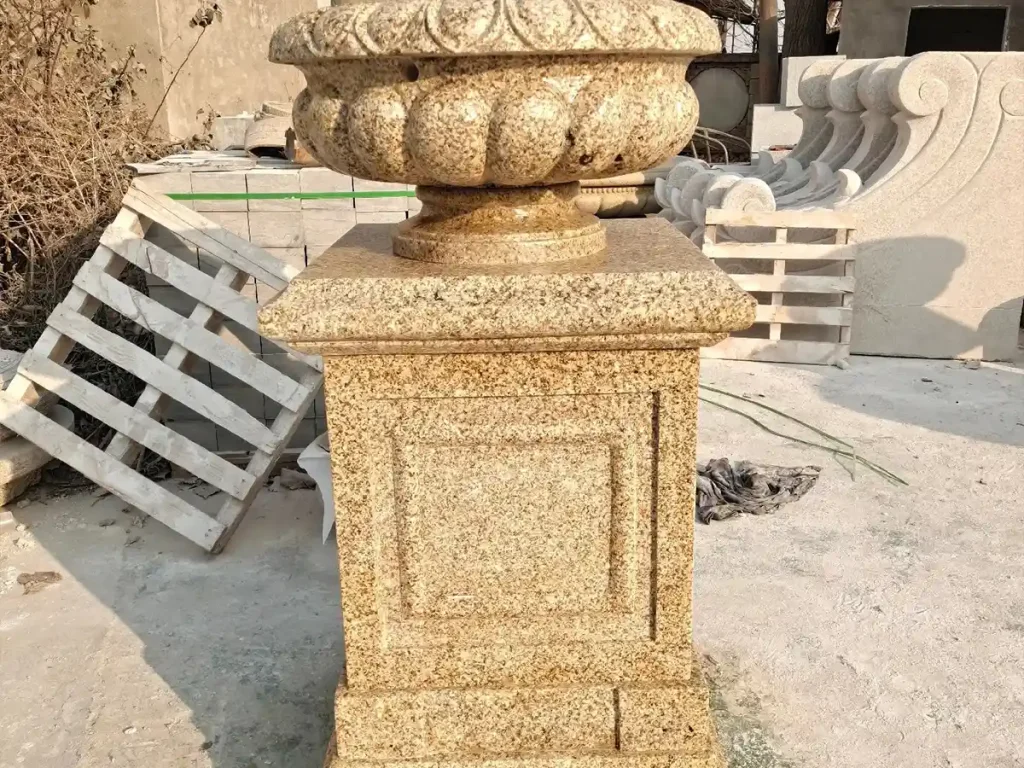
A true Solid rock planter contains far fewer internal pores than concrete. Water cannot penetrate deeply into the structure.
Without trapped moisture, freeze cycles have little effect.
This is why stone planters are naturally Frost-resistant and effectively Frost-proof in most climates.
The durability becomes obvious when you visit historic gardens.
You will find Natural stone flower pots that are hundreds of years old. Rain, snow, sun, and wind have weathered them—but the structure remains intact.
Concrete rarely survives that long.
Some manufacturers attempt to improve concrete by producing Cast stone planters. These are engineered mixes designed to imitate real stone.
Cast stone can perform better than standard concrete, but it still remains a composite material.
The difference becomes clear when you compare them side by side:
Natural Solid Stone Planters
- Carved from a single geological block
- Extremely dense structure
- Naturally Frost-proof and Frost-resistant
- Exceptional Structural integrity
- True Architectural grade material
Cast Stone Planters
- Molded from cement-based mixtures
- Contains internal micro-pores
- Improved durability but still susceptible to cracking
- Shorter lifespan under extreme climates
For estate landscapes, hotels, and architectural projects designed to last generations, the material choice becomes obvious.
Real stone is not simply stronger.
It is permanent.
A properly carved granite or limestone planter can survive centuries with minimal maintenance. The surface may soften slightly. Edges may round over time.
But the structure remains.
That is the difference between decoration and infrastructure.
Concrete fills space.
Stone becomes part of the architecture.
FAQ: Selecting, Maintaining, and Winterizing Your Planters
Large outdoor planters are architectural elements. Once installed, they become part of the landscape structure for decades.
Because of that permanence, clients—especially estate owners, architects, and developers—ask the same practical questions before choosing materials. These answers come directly from our manufacturing experience and engineering reports.
A good planter should survive storms, winters, heavy planting, and daily use without becoming a maintenance problem.
Below are the most common questions we receive when designing large stone and cast iron planters for estates and commercial landscapes.
What is the best material for large outdoor planters in freezing climates? (Are natural stone planters frost-proof?)
The most resilient natural material for cold climates is granite.
Granite is extremely dense and nearly non-porous, which means water cannot penetrate deeply into the stone. Without trapped moisture inside the structure, freeze–thaw cycles cause very little internal stress.
Because of this density, high-quality Natural stone planters made from granite are effectively frost-proof. Limestone and marble can also perform well if they are properly sealed and sourced from dense quarries.
High-quality Cast stone planters can also survive cold climates, but only when the mixture is engineered correctly. Cheap concrete planters fail because they absorb water easily, which expands during freezing temperatures and eventually causes cracking.
How do I prevent large planters from tipping over in high winds?
Wind rarely tips over a heavy planter by itself.
The real problem is tall plants. Trees, bamboo, and large ornamental grasses behave like sails when strong wind catches them. The taller the plant, the more leverage it creates against the planter.
There are several professional solutions:
Internal ballast – Fill the bottom 60–70% of the planter with crushed stone, gravel, or bricks before adding soil. This dramatically lowers the center of gravity.
Mechanical fixing – For public plazas or exposed rooftops, planters can be anchored using stainless anchor bolts or concealed brackets.
Strategic placement – Position large vessels behind walls, hedges, or architectural windbreaks that reduce wind pressure.
In estate landscapes and hotel courtyards, designers often combine ballast and placement to create extremely stable installations.
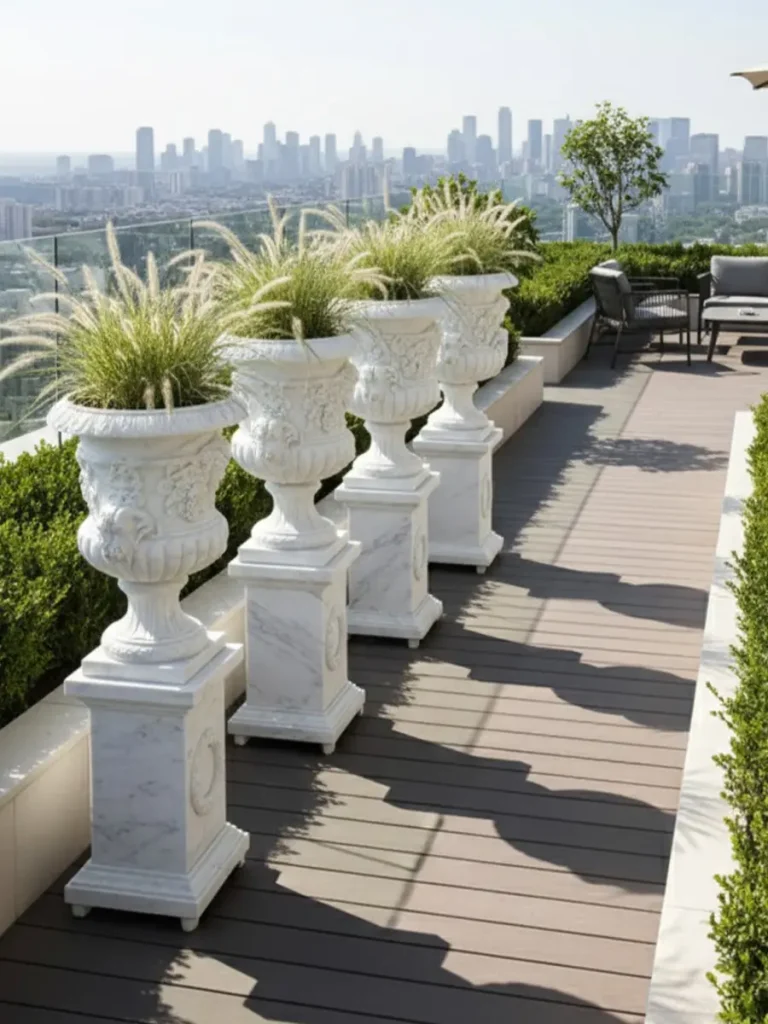
What is the weight limit for planters on a balcony or rooftop garden?
This is one of the most important safety questions.
Most residential balconies in North America are designed to support approximately 60–100 pounds per square foot (psf). That sounds substantial, but large planters add weight very quickly once soil and water are included.
For example, a planter measuring 2 ft × 2 ft × 1 ft can easily exceed several hundred pounds when filled with wet soil and plants.
For Rooftop garden integration, landscape architects follow three key guidelines:
Place the heaviest planters close to load-bearing walls.
Align planters with structural beams whenever possible.
Avoid concentrating multiple heavy planters in a small area.
In large commercial projects, engineers often review planter locations during the design phase. For residential rooftops, it is wise to consult a structural professional before installing extremely heavy stone vessels.
How do you safely move ultra-heavy large outdoor planters?
Moving a massive stone planter can feel impossible if you try to lift it directly.
Fortunately, there are simple techniques that dramatically reduce the effort required.
One of the oldest methods is the “Ancient Egyptian” roller technique. Place several short PVC pipes or metal tubes under the planter and roll it forward slowly. As the planter moves, take the pipe from the back and place it at the front.
This technique allows extremely heavy objects to glide across flat surfaces with minimal force.
Other useful tools include:
Forearm Forklifts – Heavy-duty lifting straps that allow two people to carry heavy objects safely, especially up stairs.
Furniture dollies – Ideal for patios and smooth concrete surfaces.
Specialized devices such as Potwheelz – Professional tools designed specifically for moving large planters.
For extremely large Commercial size outdoor planters, cranes or forklifts are often used during installation.
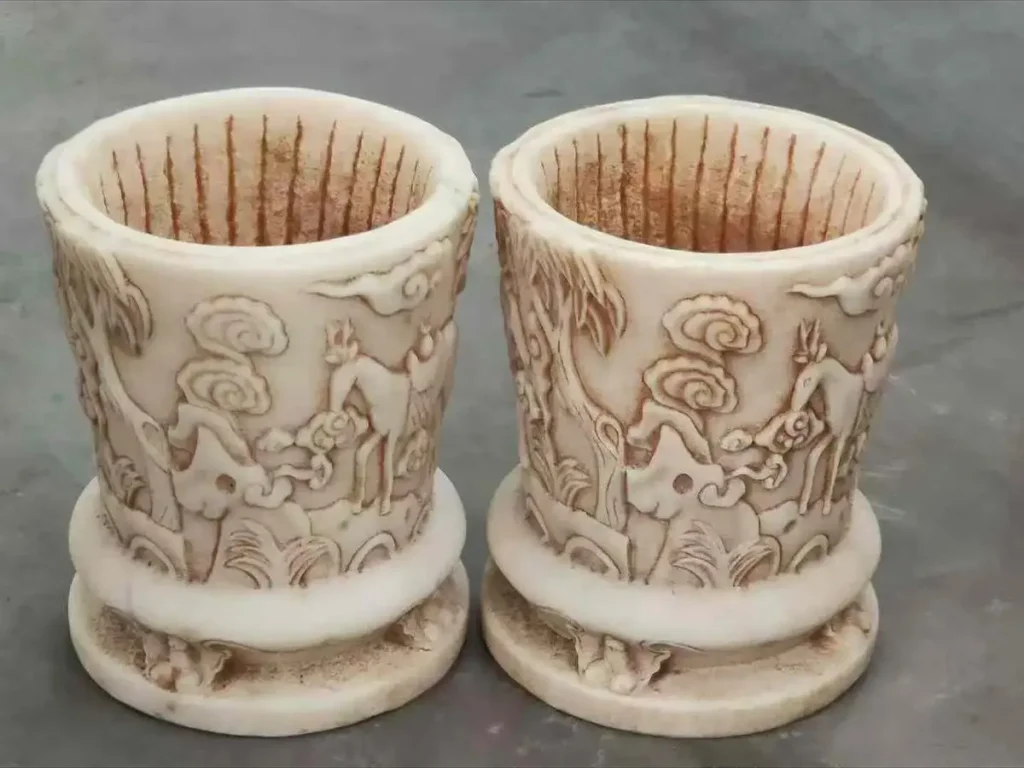
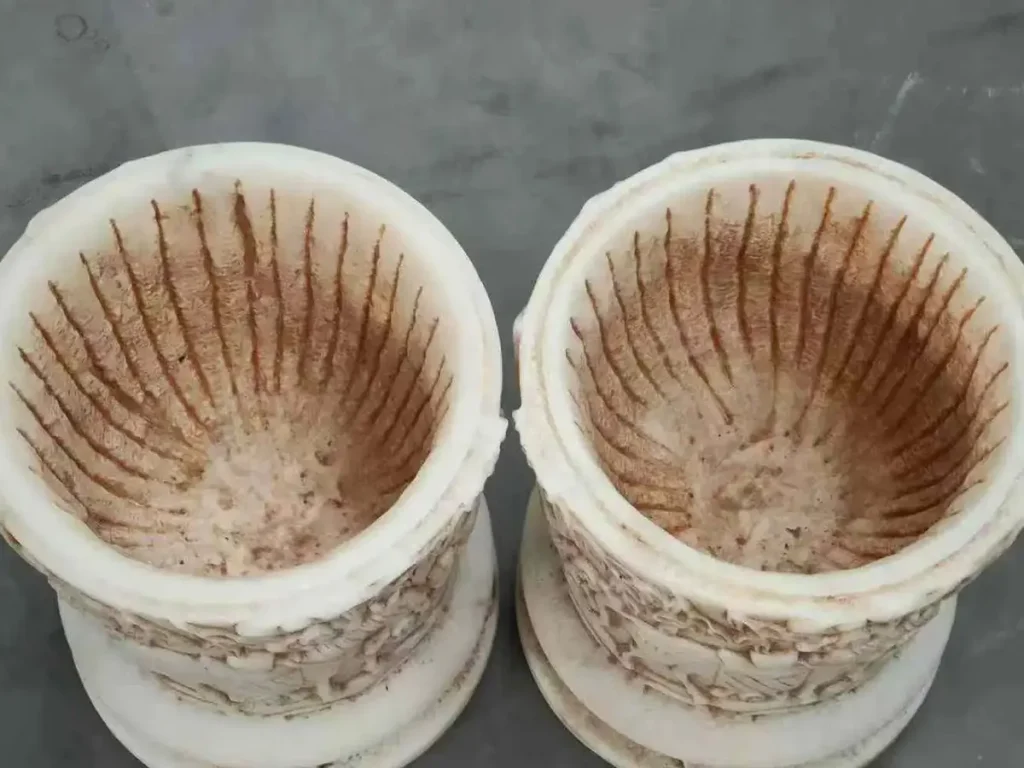
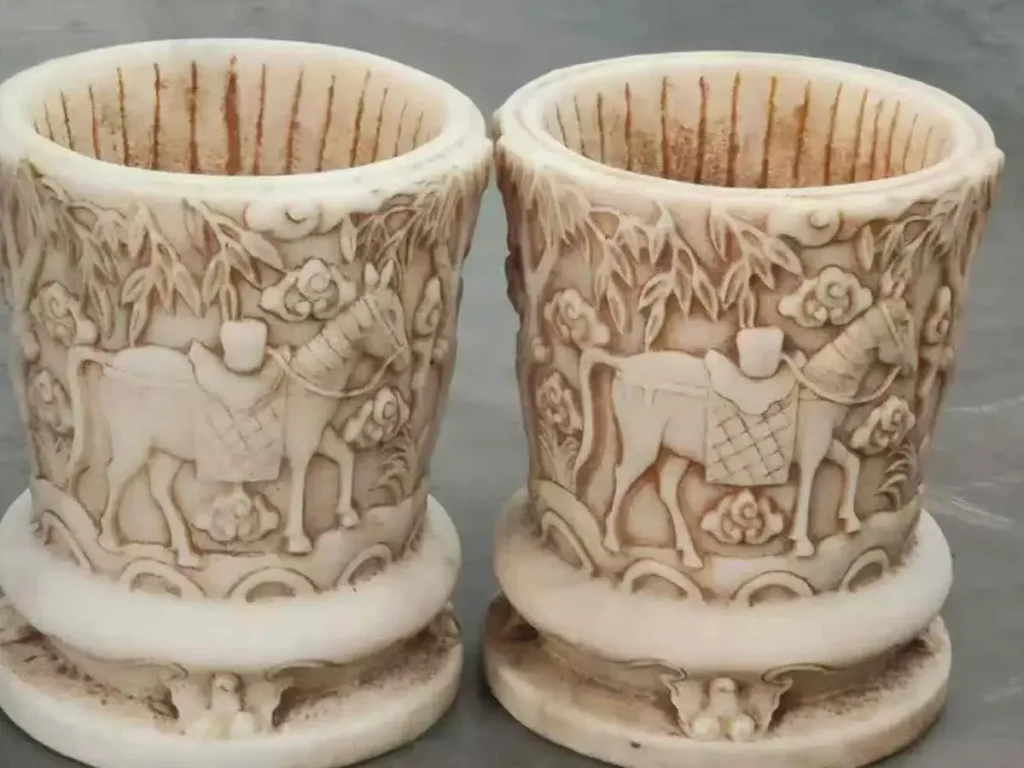
How do I clean rust stains left by cast iron planters on stone patios?
Cast iron urns develop beautiful character over time, but rust runoff can sometimes leave stains on surrounding stone or concrete surfaces.
The cleaning method depends on how severe the stain is.
For light stains, white vinegar works well because it dissolves mild oxidation. However, vinegar should never be used on marble or other calcium-based stones because it can etch the surface.
For moderate stains, a paste made from baking soda and water can gently lift discoloration. Apply the paste, allow it to sit for several minutes, then scrub lightly with a soft brush.
For heavy stains on concrete or bluestone patios, diluted muriatic acid can be effective. This is a strong solution and should be used carefully with proper safety equipment.
One important rule: never use wire brushes together with acid cleaners. Metal brushes can react with the acid and worsen staining instead of removing it.
How do I clean natural stone garden planters? Can you paint stone planters?
Natural stone planters require very little maintenance.
Routine cleaning usually involves nothing more than water and a pH-neutral soap. A soft brush can remove soil buildup, algae, or organic debris without damaging the surface.
Harsh chemicals and high-pressure washing should be avoided because they can erode softer stones over time.
One question we hear frequently is whether people should paint their stone planters.
The answer is simple: do not paint natural stone.
Stone is a breathable material. Moisture naturally moves through microscopic pores in the surface. When paint is applied, it traps moisture inside the stone and can cause peeling or surface damage later.
Painting also destroys one of the most beautiful qualities of real stone: Patina development.
Over time, sunlight, rain, and air slowly soften the surface and deepen the color of the material. This natural aging process gives stone its character and historical appearance.
Covering it with paint removes that authenticity.
A real stone planter should age naturally.
That is part of its beauty—and part of its value.
What is the difference between natural marble and cast stone planters?
The difference begins with the material itself.
Natural marble planters are carved directly from quarried stone. Each piece contains organic veining formed by geological pressure over millions of years. No two planters ever look identical, which is why marble is associated with luxury estates, historic gardens, and architectural landmarks.
Marble also has a distinctive cool touch. Even under sunlight, the surface often feels colder than surrounding materials. This density contributes to its longevity but also makes marble extremely heavy.
The downside is cost and weight.
Large marble vessels can be very expensive to quarry, transport, and install. For estate-scale gardens, a single marble urn may weigh hundreds of kilograms.
Cast stone planters, by contrast, are engineered materials. Manufacturers combine cement with fine aggregates and pigments to create a stone-like mixture that can be poured into molds.
This process offers several practical advantages:
Approximately 30–50% lower cost than natural marble
Slightly lighter weight, making installation easier
Consistency in color and shape, ideal for large matching sets
Because cast stone is molded rather than carved, designers can produce dozens of identical planters for hotels, plazas, or large landscape projects.
In short: marble offers authenticity and uniqueness, while cast stone offers efficiency and uniformity.
How do I winterize my planters to prevent cracking?
Winter damage is almost always caused by the same mechanism: freeze–thaw cycles.
When soil inside a planter becomes saturated with water and temperatures drop below freezing, the expanding ice creates pressure against the walls of the container. Over time, that pressure can cause cracks.
Preventing this problem requires a few simple seasonal steps.
First, remove excess soil and water before the first frost. A waterlogged planter is far more vulnerable than a dry one.
Second, if the planter will not be used during winter, invert it or cover it with breathable weatherbags. Breathable covers prevent rain from filling the planter while still allowing moisture to escape.
Third—and most important—never place planters directly on flat ground during winter.
Use small spacers often called pot feet. These raise the planter slightly above the surface so melting snow or rainwater cannot collect underneath.
Standing water that freezes beneath a planter is one of the most common causes of winter cracking.
With proper elevation and drainage, most high-quality stone or cast iron planters survive winters without difficulty.
How can I reduce the overall weight of a large planter?
Large planters can become extremely heavy once filled with soil, water, and plants.
Fortunately, professional landscapers rarely fill the entire container with soil. The lower portion of the planter is usually filled with lightweight materials that reduce weight and improve drainage.
Common options include:
Styrofoam chunks or foam blocks
Packing peanuts sealed inside mesh bags
Expanded clay pellets
Specialized drainage mesh systems
These materials occupy space without adding significant weight. Soil is then placed only in the upper section where plant roots actually grow.
Another solution is using double-walled planters.
In this design, the planter has an internal false bottom that creates a hidden cavity beneath the soil layer. This cavity reduces soil volume and significantly lowers the final weight of the planter.
Both techniques are widely used in rooftop gardens and terrace landscapes where structural load limits must be respected.
Will metal planters kill my plants in the summer heat?
Metal containers behave very differently from stone.
Materials such as cast iron or steel absorb solar heat rapidly. In direct summer sunlight, the surface temperature of a dark metal planter can become extremely hot.
When that heat transfers into the soil, it can stress plant roots.
This does not mean metal planters cannot be used successfully. It simply means plant selection becomes important.
Heat-tolerant species perform best, including:
Succulents
Lavender
Ornamental grasses
Mediterranean herbs
These plants are naturally adapted to warm, dry conditions and tolerate higher soil temperatures.
Other practical strategies include placing metal planters in partial shade, using mulch layers to insulate soil, or installing inner liners that create an insulating gap between the metal wall and the planting soil.
With thoughtful planting choices, metal urns remain excellent containers for dramatic landscape displays.
How can I tell if a planter is real cast iron or a cheap fake?
Cast iron planters have been imitated for decades.
Many modern manufacturers produce aluminum, zinc, or thin metal versions that resemble cast iron but lack the same durability and weight. Fortunately, identifying real cast iron is simple.
Start with the magnet test.
A strong magnet will firmly attach to genuine iron. If the magnet slides off or barely sticks, the planter is likely aluminum or another lightweight alloy.
Weight is the second clue.
Real cast iron is extraordinarily heavy. Even a medium-sized urn often requires two people to lift comfortably. If a planter feels surprisingly light, it is probably not true cast iron.
Finally, examine the surface.
Authentic cast iron typically shows subtle casting textures and thick structural walls. Cheap replicas often have thinner edges and smoother surfaces produced by modern casting shortcuts.
For estate landscapes, real cast iron remains unmatched in durability and historical authenticity.
Conclusion
Landscapes communicate permanence.
A property defined by architectural planters immediately feels more intentional, more structured, and more enduring. Whether the design calls for classical garden urns or modern minimalist troughs, the material you choose becomes part of the landscape’s identity.
A cast iron urn raised on a pedestal can frame an entrance with timeless authority.
A five-meter limestone planter can organize an entire terrace or courtyard with quiet precision.
Both serve the same purpose: they anchor the space.
When planters are built from architectural-grade materials—stone, marble, granite, or true cast iron—they stop behaving like garden accessories. They become structural elements of the estate itself.
Years pass. Plants change. Buildings are renovated.
But the stone remains.
And that is the real goal of good landscape design: to build objects that will still stand there, exactly where they belong, decades from now.
– Boss Zhang & Elena Zhang, Yun Sculpture