Get in touch with Yun-Sculpture company
The Geometric Language of Modern Architecture: The Ultimate Guide to Custom Geometric & Abstract Metal Sculptures

Architecture has always spoken through geometry. Columns, planes, and volumes form the grammar of the built environment. In contemporary design, that language extends beyond walls and roofs into sculptural elements that define the emotional tone of a space.
As an art and spatial consultant, I often explain that a building does not truly feel complete until its surfaces begin to communicate with the surrounding landscape. This dialogue between structure and artistic intervention is where geometric sculpture and abstract metal wall art become essential.
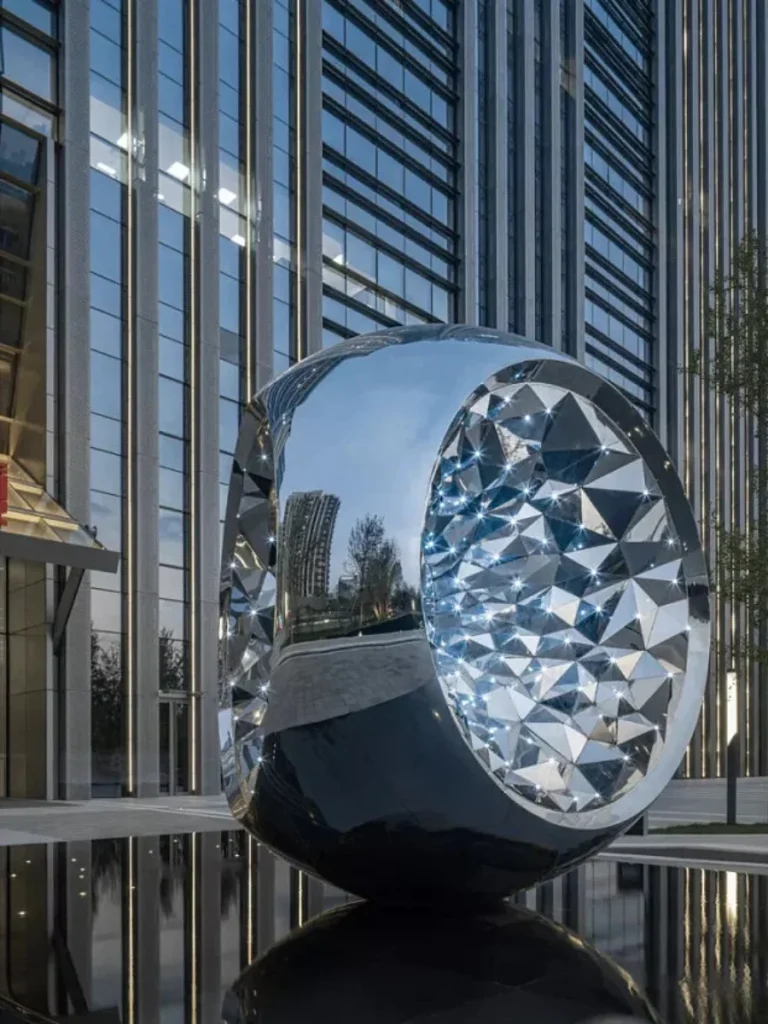
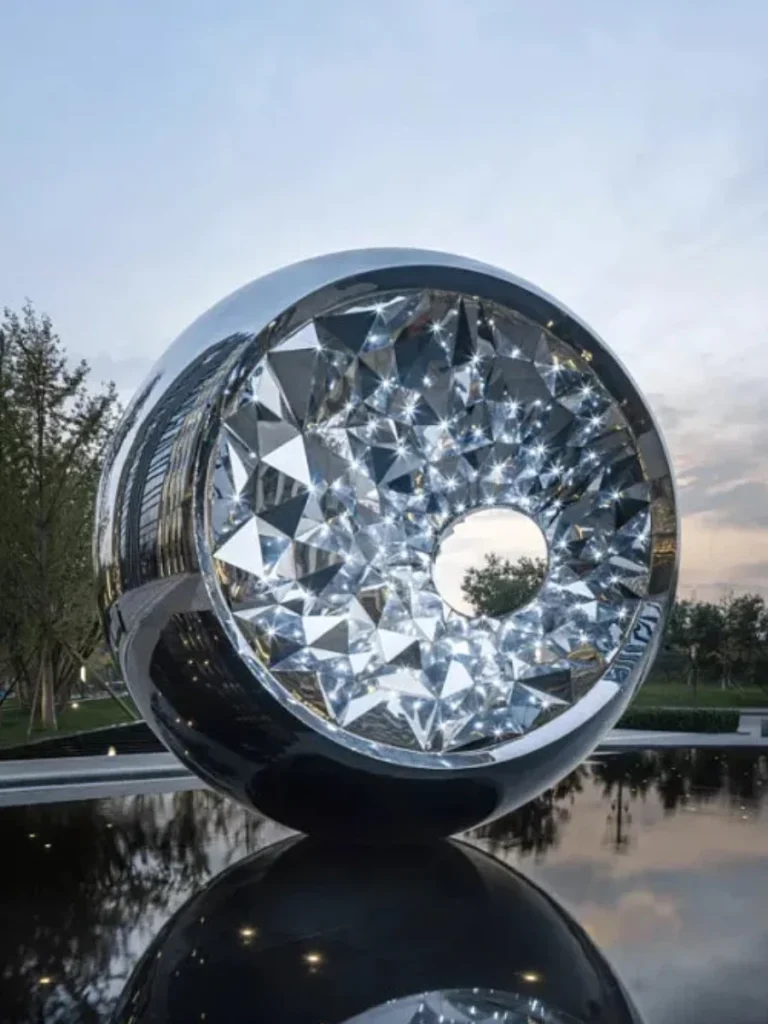
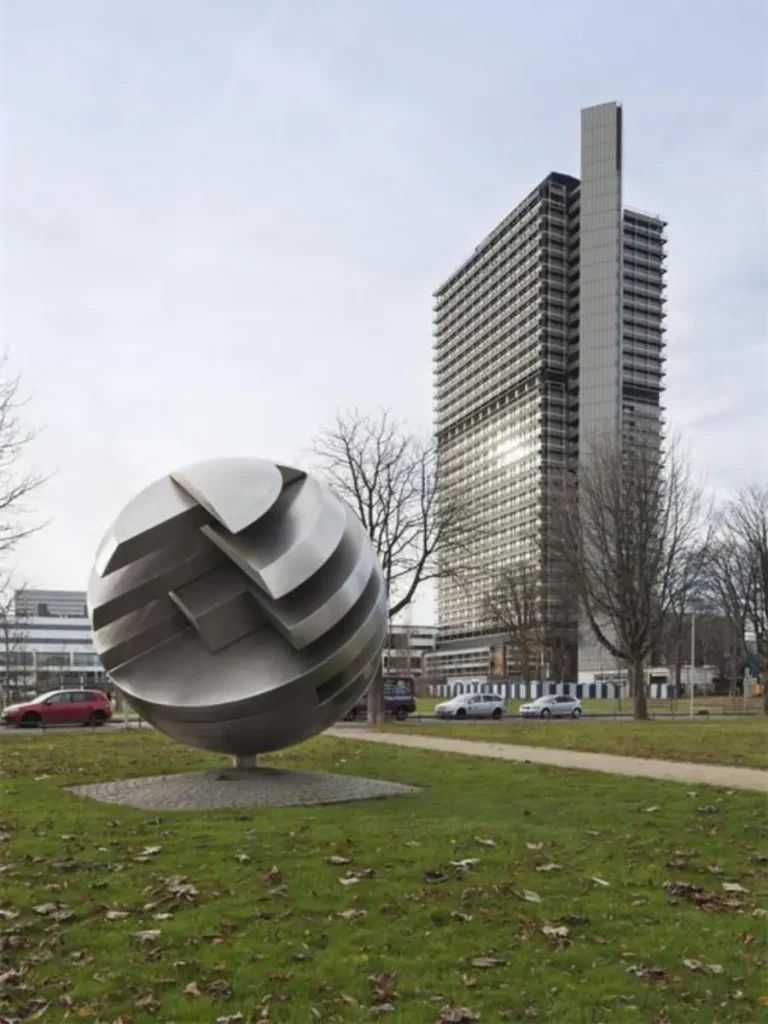
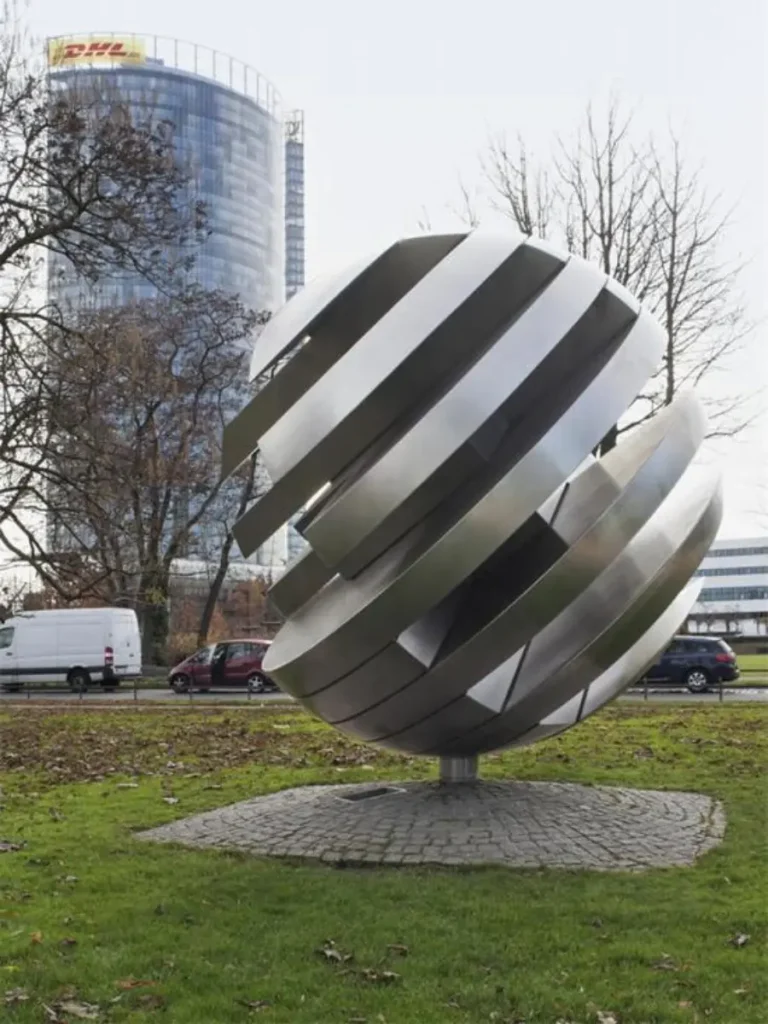
In modern plazas, corporate campuses, and luxury residences, these pieces act as visual anchors. A carefully positioned modern metal sculpture can transform an empty forecourt into a destination. A sculptural installation on a façade can turn a plain architectural surface into a memorable landmark.
Unlike figurative art, geometric works do not dictate meaning. They invite interpretation through proportion, reflection, and movement of light. Visitors may not immediately analyze the forms, yet they feel their presence instinctively.
For architects and developers, this is precisely the appeal. Abstract works integrate seamlessly with modern design because they share the same fundamental language—line, structure, and spatial rhythm.
Table of Contents
Table of Contents
Defining Modernity: What is Geometric and Abstract Sculpture?
At its core, an abstract geometric sculpture relies on the purity of form. Cubes, spheres, triangles, and polyhedrons replace figurative imagery. These shapes mirror the vocabulary of modern architecture, where buildings themselves are composed of intersecting planes and structural grids.
When placed within architectural space, the sculpture becomes an extension of the building’s logic. A cluster of stainless steel cubes might echo the window grid of a façade. A suspended sphere may balance the vertical tension of surrounding towers.
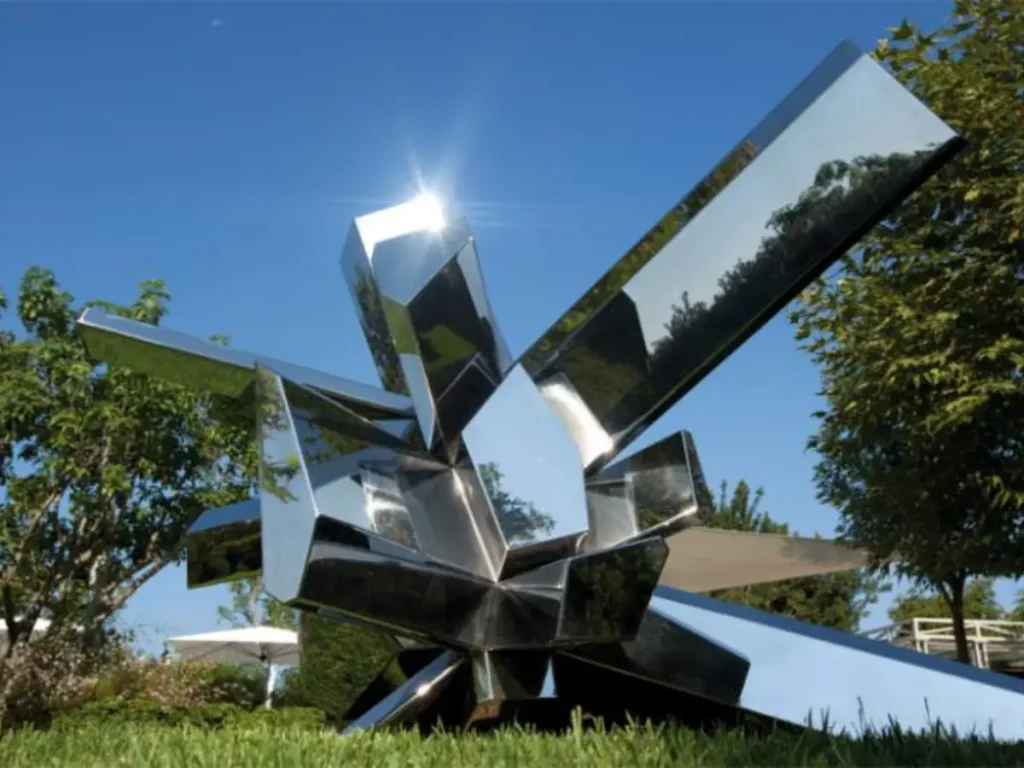
The strength of geometric sculpture lies in this structural harmony. The artwork feels intentional, as if it grew naturally from the architecture around it.
Scale also plays an important role. Smaller works may function as refined abstract metal wall art, integrating directly into façades or interior feature walls. Larger installations operate as spatial landmarks, visible from multiple vantage points within a plaza or garden.
Visual rhythm emerges through repetition and variation. An abstract metal sculpture composed of repeating triangular modules can create the sensation of movement, even though the structure remains physically static.
Light becomes an active participant in the design. Sunlight moves across sharp edges and planar surfaces throughout the day, altering shadows and reflections. The sculpture transforms constantly without any mechanical motion.
This quality allows abstract sculpture to resonate with its environment. Instead of competing with architecture, it amplifies the spatial rhythm already present in the design.
The Narrative of Materials: The Coldness of Stainless Steel vs. The Warmth of Copper
The Liquid Silver
For projects that pursue a strong contemporary identity, a mirror polished stainless steel sculpture often becomes the preferred material choice.
The effect is not simply reflective—it is transformative. When finished correctly, the metal surface dissolves into its surroundings, capturing sky, architecture, and passing movement.
Donghui Zhang often describes the process with engineering precision. Achieving an 8K mirror polish on 316L Marine Grade stainless steel requires an extensive sequence of grinding and polishing stages, each progressively refining the surface.
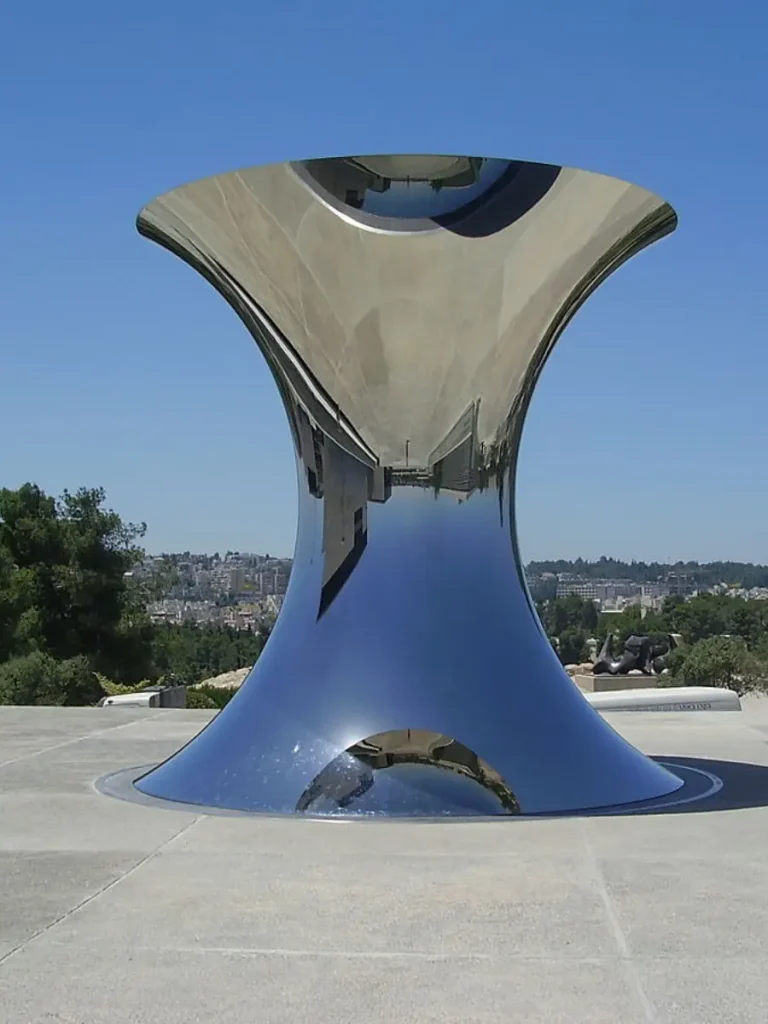
The result is what designers call the liquid silver effect. Reflections appear fluid, almost like mercury flowing across the sculpture’s geometry.
In public spaces, this creates a powerful interaction with visitors. People see fragments of themselves within the artwork. Buildings bend and fold across the polished planes, turning the sculpture into a living mirror of the city.
At night, architectural lighting amplifies the experience. Reflections multiply across the surface, allowing a single sculpture to interact visually with the entire plaza.
The Breathing Copper
Yet not every project seeks this crystalline modernity.
Copper tells a different story. Where stainless steel emphasizes precision and reflection, patina copper introduces warmth and time into the artwork.
A copper sculpture begins with a deep metallic glow. Over the years, exposure to air and moisture gradually transforms the surface, developing a natural verdigris patina.
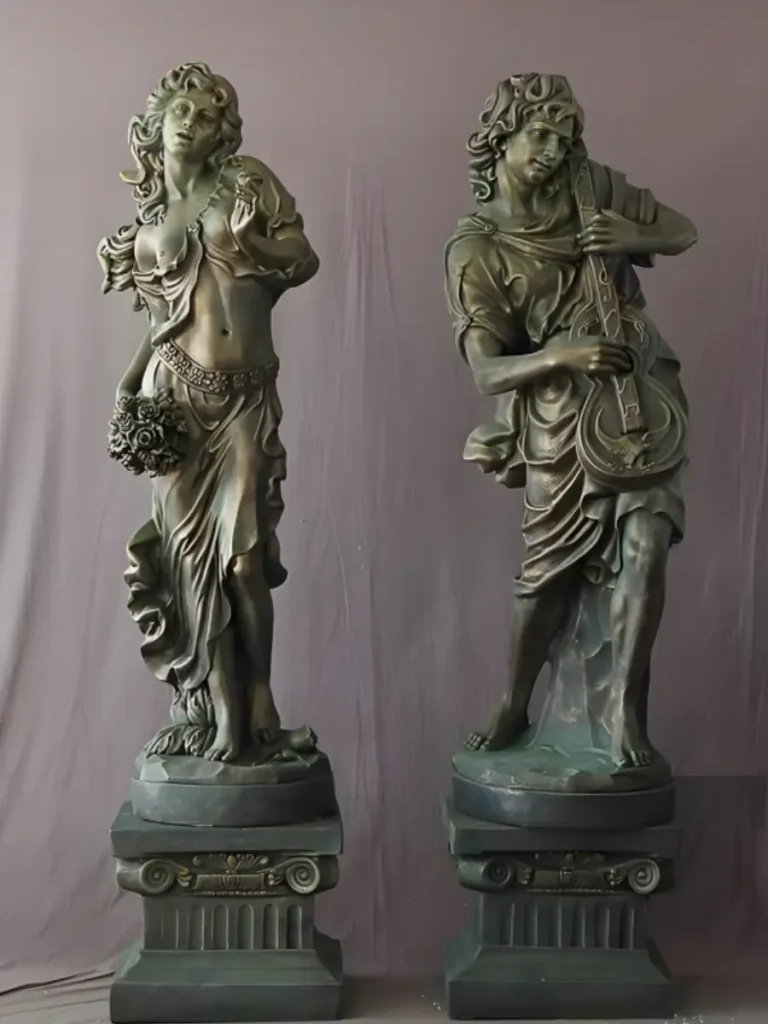
This evolving layer gives the sculpture a sense of life. Colors shift from warm bronze tones to soft greens and turquoise hues. No two pieces age in exactly the same way.
For architects working with stone façades, historic districts, or landscape-driven environments, this living surface offers a depth that stainless steel cannot replicate.
The sculpture does not remain static. It matures alongside the building, quietly recording the passage of seasons.
3D Depth in Space: Monumental Impact Without the Weight
Modern architecture increasingly favors large visual statements. Yet every architect understands the same constraint: structural load. Walls, façades, and plaza foundations can only support a limited amount of weight.
This is where a 3d metal wall art sculpture or freestanding 3d metal art sculpture becomes uniquely valuable. Instead of relying on solid mass like traditional cast statues, these works achieve dramatic spatial presence through form, layering, and engineered hollow structures.
In other words, they create monumentality without excessive weight.
For example, a geometric installation covering an entire lobby wall might extend 30 to 60 centimeters outward, producing strong dimensional depth. To the viewer, it feels sculpturally massive. Structurally, however, the piece remains surprisingly light.
This principle allows large-scale installations to appear bold and architectural while remaining compatible with modern building systems.
Hollow Forging and Sculptural Form
Donghui Zhang explains that many contemporary pieces rely on a centuries-old approach known as the direct metal sculpture technique. Instead of casting the entire sculpture as a solid form, artists work directly with sheets of metal.
Two important methods define this process:
- Repoussé:
Metal sheets are hammered from the reverse side to create raised forms on the front surface. - Direct forging and shaping:
Craftsmen shape stainless steel or copper panels over structural molds, refining edges and planes by hand.

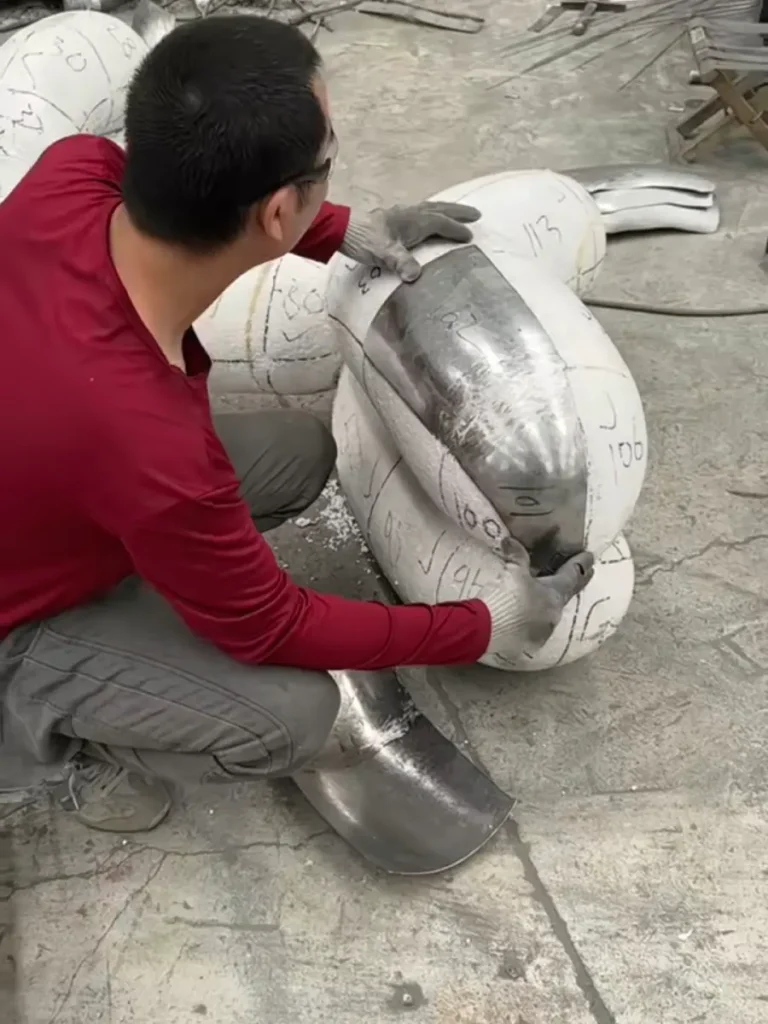

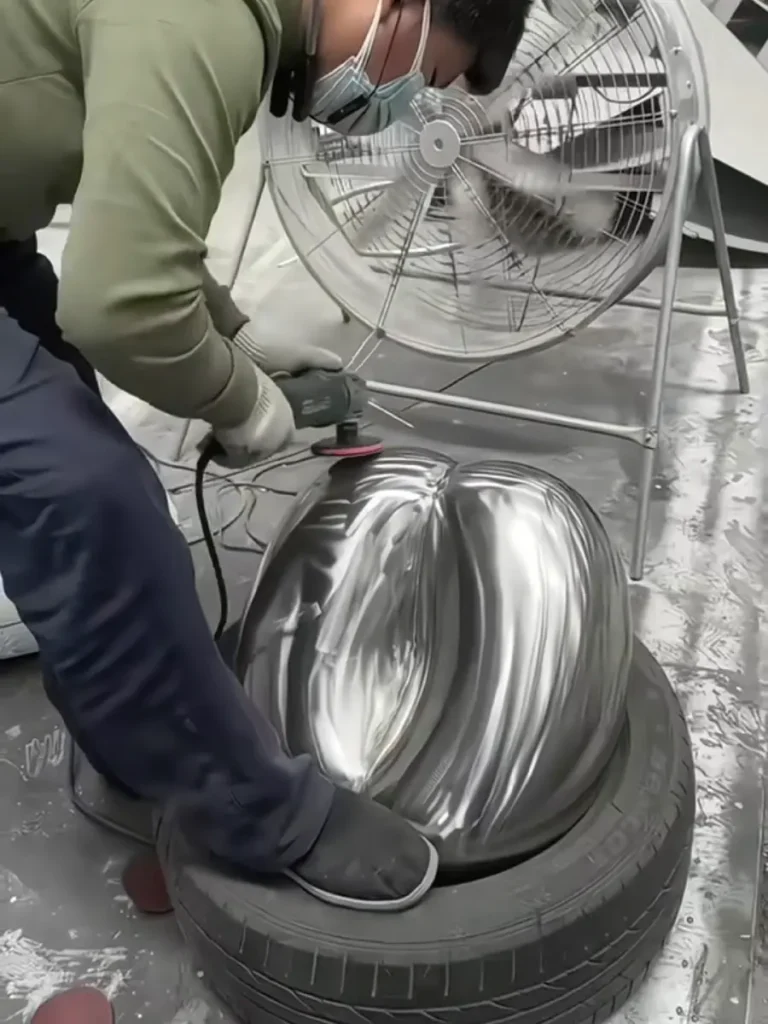
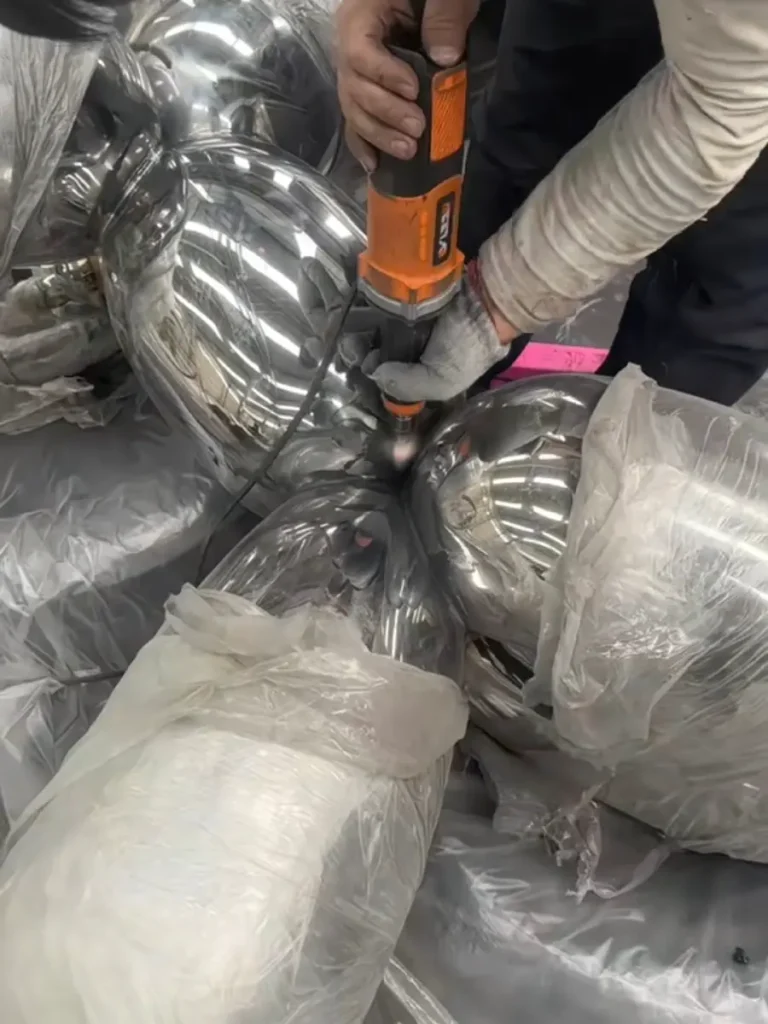
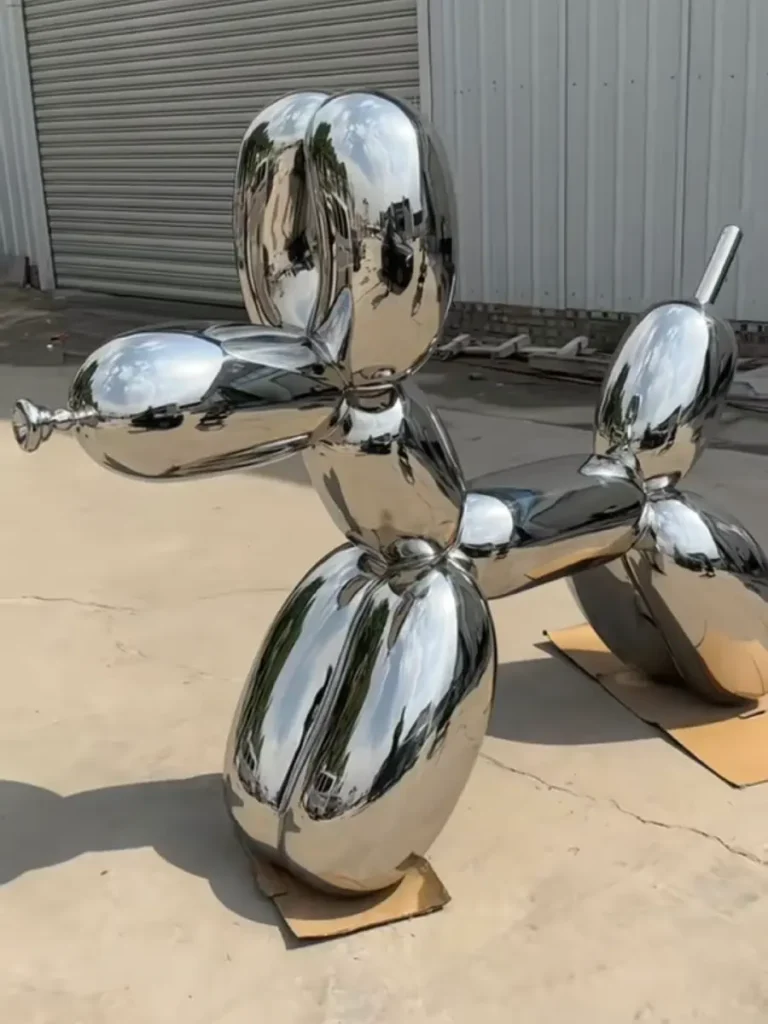
Through these techniques, metal can be formed into complex geometric volumes while remaining hollow inside.
The benefits are significant:
- Dramatically reduced weight compared with cast sculpture
- Greater flexibility in creating large surfaces and angular forms
- Easier transportation and installation for oversized works
- Structural efficiency when integrated with internal frames
A sculpture that visually appears as a massive cube or sphere may actually be constructed from precisely formed stainless steel panels surrounding a hidden structural frame.
This approach allows sculptors and engineers to collaborate closely during custom metal sculpture fabrication, ensuring both aesthetic integrity and structural reliability.
Light and Shadow as Architectural Materials
From the artistic perspective, hollow geometric construction also unlocks a powerful visual tool: shadow.
As Elena often notes in design consultations, geometry allows light to become an active design element.
Stacked planes, folded panels, and intersecting shapes create layers of depth. As sunlight moves across the sculpture, sharp highlights and deep shadows shift constantly.
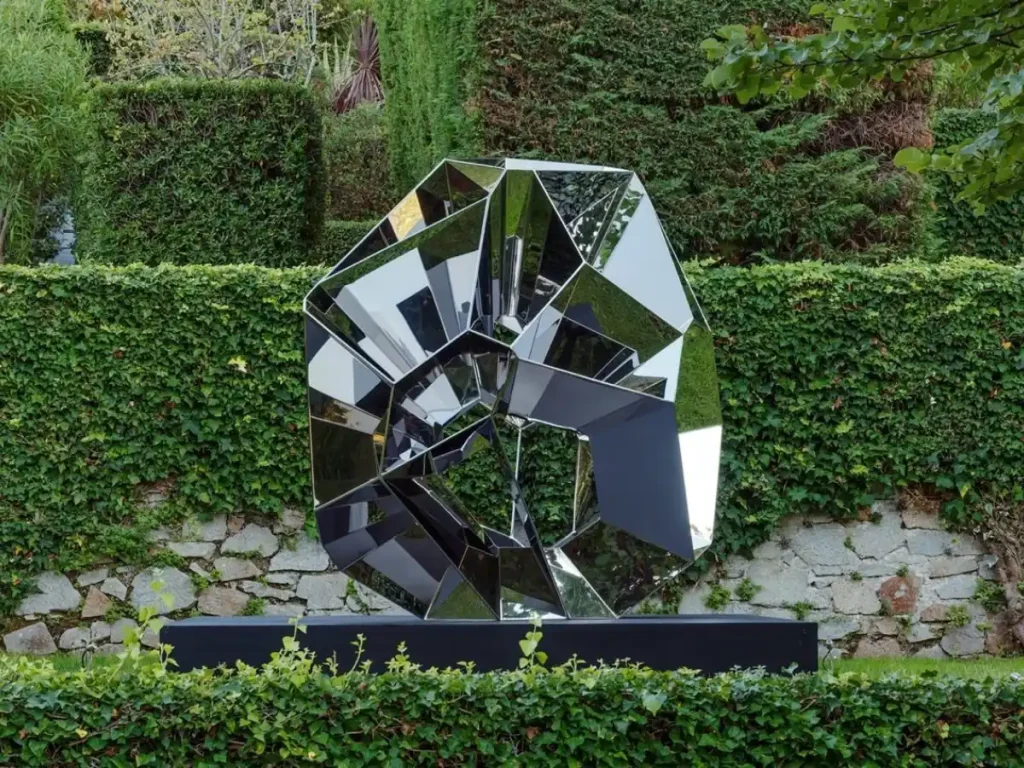
A wall-mounted 3d metal wall art sculpture composed of overlapping triangular panels may appear dramatically different from morning to afternoon. What begins as subtle texture can transform into bold architectural relief once the sun strikes at a lower angle.
This dynamic quality is one reason architects frequently choose geometric sculpture for contemporary façades. Instead of remaining visually static, the artwork evolves with the movement of light across the building.
Invisible Engineering: From Concept to Safe Installation
Behind every successful sculpture lies engineering that most visitors never see.
For collectors browsing large outdoor metal sculptures for sale, the artistic form is naturally the first attraction. Yet for engineers, the real question begins beneath the surface: how does the piece remain stable under real-world conditions?
Wind, temperature changes, and structural vibration all affect outdoor installations. In open commercial plazas or coastal environments, these forces can be substantial.
Donghui Zhang emphasizes that every major installation begins with the design of an internal structural skeleton.
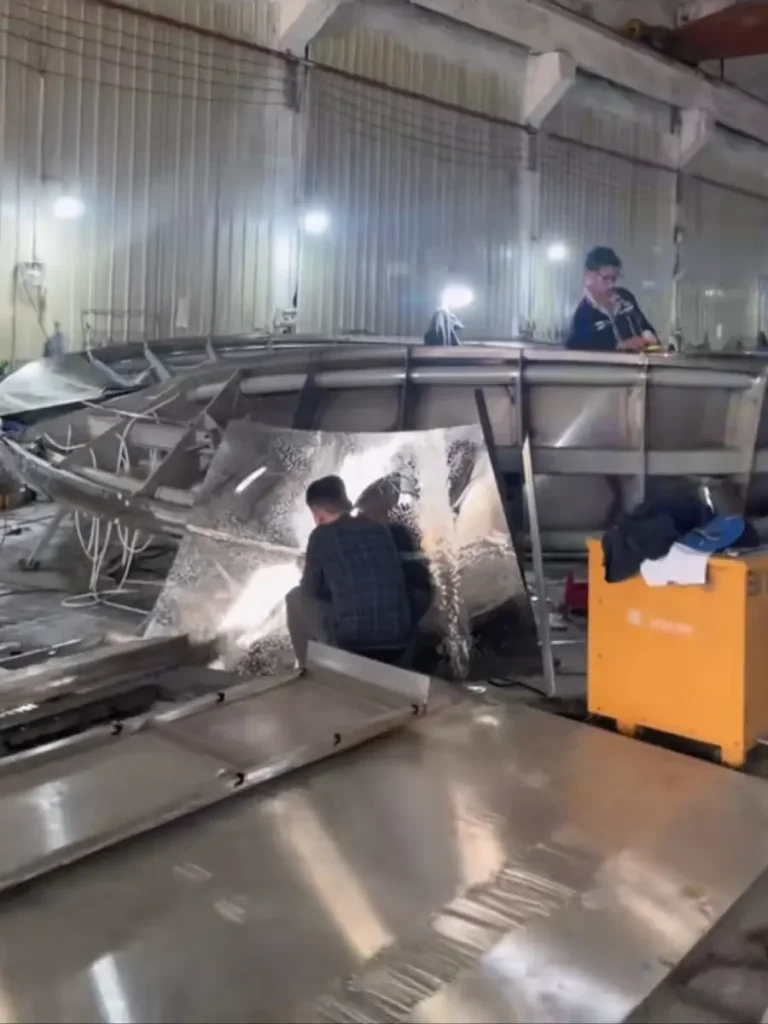
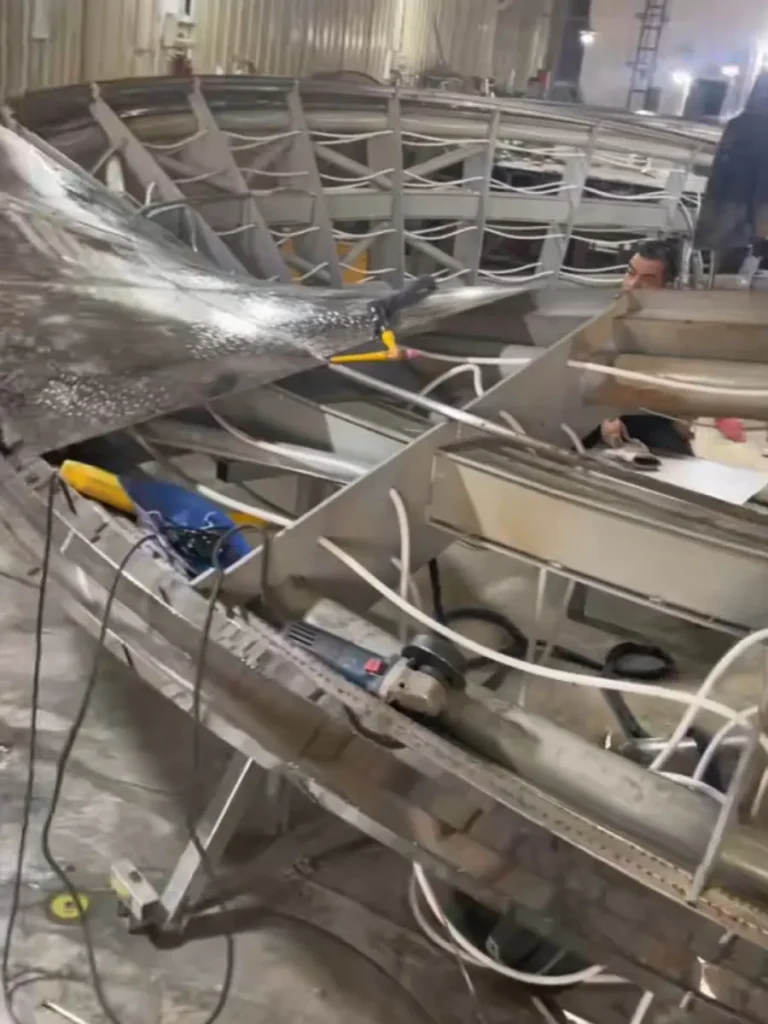
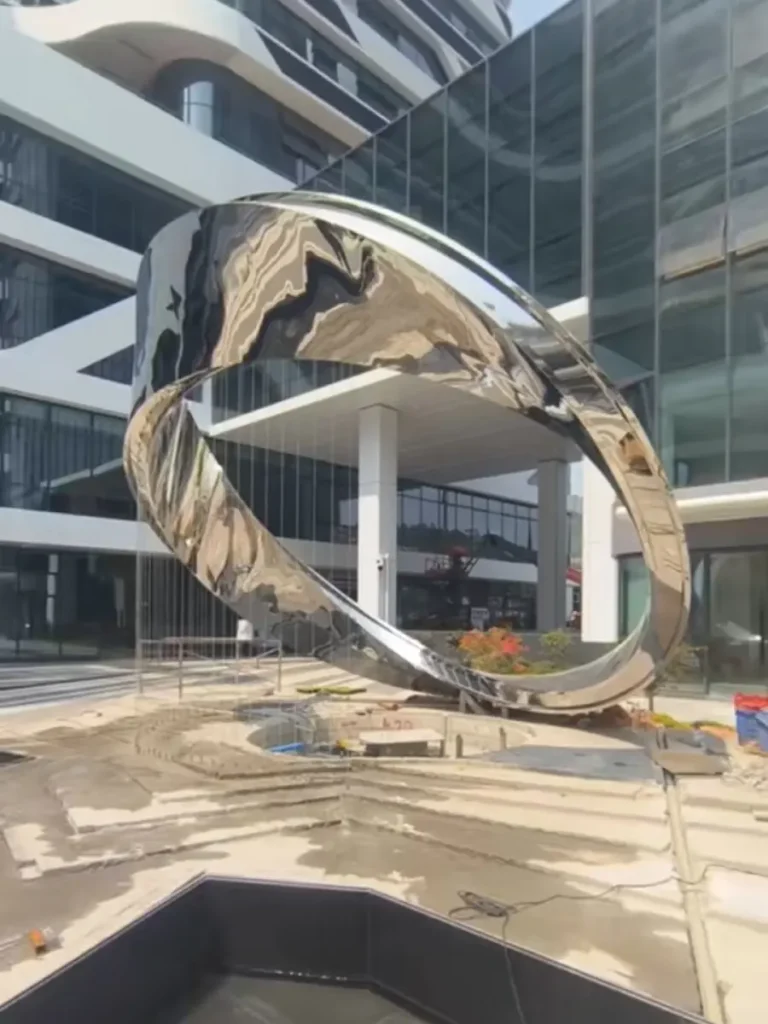
This internal framework distributes loads across the sculpture and transfers forces safely into the building structure or foundation. The outer metal skin—whether stainless steel, copper, or weathering steel—then attaches to this engineered frame.
Typical structural considerations include:
- Calculating extreme wind loads for exposed locations
- Designing internal ribs and supports to prevent deformation
- Allowing for thermal expansion of large metal surfaces
- Maintaining perfect exterior alignment for geometric forms
A memorable example involved a corporate plaza installation in Dubai. The sculpture appeared as a delicate ring of intersecting stainless steel planes. In reality, the internal framework functioned more like a bridge truss than a decorative object.
The engineering ensured that strong desert winds would never compromise the artwork’s stability.
Safe Installation Without Visible Hardware
Equally important is how the sculpture connects to the building.
The goal is always the same: maximum safety with minimal visual intrusion.
During installation, engineers typically rely on concealed mounting systems such as:
- Stainless steel expansion bolts anchored into reinforced concrete walls
- Hidden steel back-frames that distribute the sculpture’s weight
- Adjustable mounting brackets for precise alignment
- Internal anchor plates welded directly to the sculpture frame
Different wall structures require different solutions. A sculpture mounted on a steel-framed façade uses a different anchoring system than one attached to stone cladding or reinforced concrete.
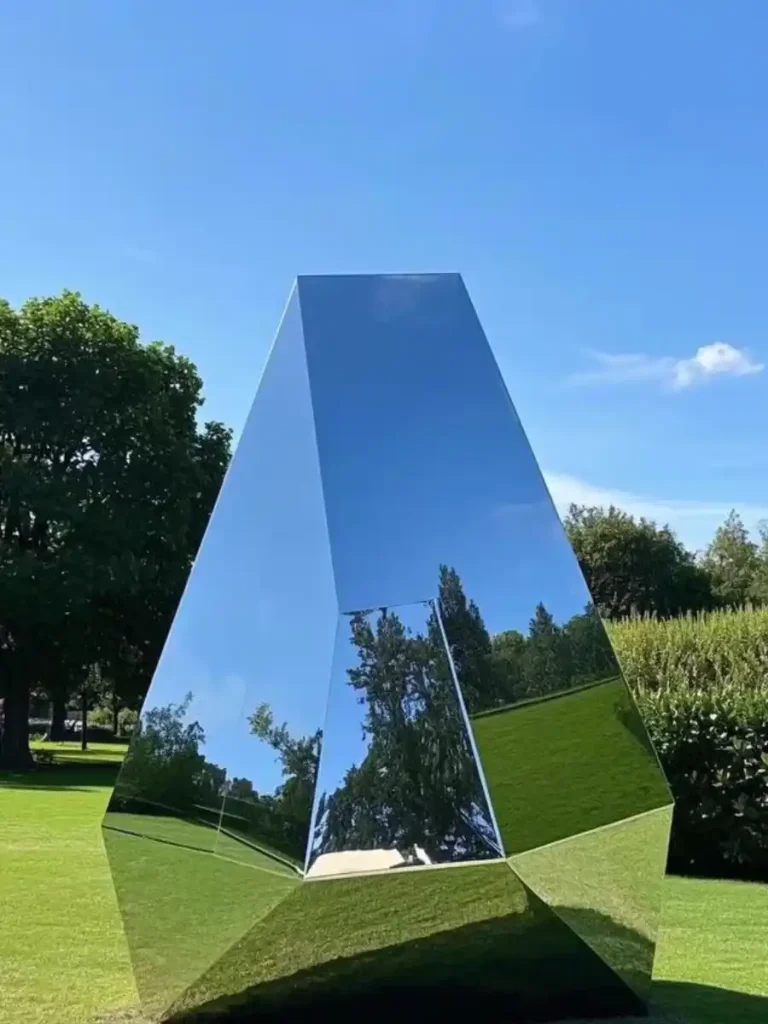

When completed, however, the engineering disappears completely.
Visitors see only the sculpture itself—floating effortlessly on the wall or standing confidently within the plaza—while the hidden structural system quietly ensures decades of safety and stability.
10 Core Questions Answered (FAQ)
What is geometric sculpture?
At its core, what is geometric sculpture comes down to understanding artistic language. Instead of representing people or animals, the artist builds form using geometric fundamentals—points, lines, planes, and volumes.
These elements combine to create cubes, spheres, polyhedrons, and intersecting structures that emphasize proportion and spatial clarity. The result feels structured, balanced, and intellectually precise.
In contemporary landscapes, geometric sculpture works especially well because it echoes the logic of modern architecture. Buildings rely on grids, vertical lines, and planar surfaces. A geometric sculpture reinforces that order while adding visual drama.
Rather than competing with architecture, it amplifies the building’s sense of rhythm and spatial harmony.
How to make geometric metal sculpture?
Many people searching how to make geometric sculpture imagine the process begins with casting molds. In reality, most high-end architectural sculptures use a completely different approach.
At Yun Sculpture, we rely on direct metal fabrication. Each form is built from individually cut metal panels that are shaped and assembled with extreme precision.
The process typically involves:
Laser-cutting stainless steel or copper sheets into exact geometric panels
Bending or rolling the panels to achieve perfect angles or curvature
Carefully aligning edges before welding
Grinding and finishing joints until they become seamlessly welded connections
When completed, the sculpture appears as if it were formed from a single continuous piece of metal.
This technique allows artists and engineers to construct complex polyhedrons or layered structures that would be impossible to achieve with traditional casting methods. It also provides far greater control over surface finish, reflection, and structural strength.
Does abstract art include metal art?
Yes—without question. When people ask does abstract art include metal art, the answer is not only yes, but that metal may be the most powerful medium for abstraction.
Metal offers structural properties that materials like stone or wood simply cannot match. Its high tensile strength allows sculptors to create extremely thin edges and extended forms that appear to float in space.
For instance, stainless steel edges can be fabricated with precision lips as thin as 2 millimeters. These razor-sharp visual lines create dramatic geometric silhouettes that would fracture instantly if carved from stone.
Metal also responds beautifully to modern finishing techniques. Polished stainless steel can produce mirror-like reflections, while copper can evolve into richly textured patinas.
Because of this flexibility, abstract metal sculpture has become a defining feature of contemporary architectural environments—from museum plazas to corporate headquarters.
Why must large geometric sculptures use 316L stainless steel?
Donghui Zhang often addresses this question during consultations with architects.
For outdoor installations—especially in coastal cities or heavily polluted urban areas—material choice becomes a critical engineering decision. Large sculptures exposed to moisture, salt, and airborne pollutants face constant corrosion risk.
This is why many monumental works use 316L marine-grade stainless steel rather than the more common 304 grade.
The key difference lies in the presence of molybdenum within the alloy. This element significantly increases resistance to pitting corrosion and rust formation.
In practical terms, that means:
Better protection against salt air in coastal environments
Greater resistance to urban pollution and acid rain
Long-term preservation of mirror-polished surfaces
For sculptures designed to last decades in public spaces, this additional corrosionresistance is essential. It protects both the structure and the visual purity of the artwork.
Will a mirror-polished sculpture cause blinding glare in the sun?
Architects frequently raise this concern during the early design phase of reflective installations.
A highly polished sculpture may appear similar to a mirror, which naturally leads people to worry about intense sunlight reflection affecting nearby buildings, pedestrians, or drivers.
In practice, careful geometric design prevents this problem.
During the engineering stage, we analyze the orientation and curvature of each sculptural surface. Facets are angled deliberately so that sunlight disperses across multiple planes rather than reflecting as a single concentrated beam.
This diffusion transforms direct reflection into a soft, luminous glow across the sculpture’s surface.
The effect is visually striking yet comfortable for the surrounding environment. Instead of producing blinding glare, the sculpture reflects fragments of sky, architecture, and landscape in constantly shifting patterns of light.
How to attach metal sculpture to siding of house?
When homeowners ask how to attach metal sculpture to siding of house, the most important principle is structural load transfer.
Siding—whether wood, vinyl, or decorative cladding—is not designed to carry significant weight. The sculpture must always be anchored to the building’s structural frame behind the surface.
Donghui Zhang explains that installation typically follows a straightforward structural method:
Locate the wall studs or structural steel frame behind the siding
Anchor the sculpture’s hidden mounting frame directly into that structure
Use stainless steel expansion bolts or structural lag bolts for secure attachment
Install waterproof gaskets and sealing layers to prevent moisture intrusion
This approach ensures the sculpture remains stable even during strong winds. At the same time, the mounting system remains visually invisible, preserving the clean appearance of the artwork against the façade.
How heavy is a 3D geometric relief sculpture?
Surprisingly, most architectural wall sculptures are far lighter than people expect.
Because we use hollow-form fabrication techniques—particularly repoussé and panel construction—a large 3D geometric relief sculpture rarely approaches the weight of a traditional cast metal statue.
For example, a wall installation measuring three meters across may appear visually massive, yet its internal structure consists of shaped metal panels supported by a lightweight internal frame.
This design dramatically reduces the total mass while maintaining structural rigidity.
As a result, even large pieces usually fall well within the safe load-bearing limits of modern exterior walls or reinforced interior partitions. Architects appreciate this efficiency because it allows dramatic sculptural depth without placing excessive stress on the building.
How to clean and maintain this type of sculpture?
Many collectors ask how to clean metal sculpture, expecting a complicated conservation routine.
In reality, maintenance is very simple.
For stainless steel or painted metal surfaces, regular cleaning involves nothing more than mild soapy water and a soft cloth. This removes dust, airborne pollutants, and mineral residue that accumulate in outdoor environments.
For additional protection, we recommend applying microcrystalline wax once per year.
This protective coating provides several benefits:
Shields the surface from acid rain and airborne pollutants
Reduces oxidation on copper or bronze finishes
Protects polished stainless steel from minor environmental staining
Adds a subtle protective barrier against UV exposure
The process takes only minutes and helps preserve the sculpture’s appearance for decades.
Can I customize a specific color or patina?
Yes. One of the most exciting aspects of metal sculpture is the ability to control color and surface character.
Through chemical treatments and specialized finishing processes, we can create a wide range of patina options tailored to a specific architectural environment.
Copper and bronze surfaces can develop controlled patinas ranging from deep antique browns to luminous turquoise greens. Stainless steel sculptures can also receive colored coatings or brushed finishes depending on the design vision.
These finishes allow architects and designers to harmonize the sculpture with surrounding materials—whether stone façades, landscaped gardens, or contemporary glass towers.
The goal is always the same: the artwork should feel integrated into the architecture rather than placed on top of it.
Can I see a 3D preview before production begins?
Yes, and in modern sculpture fabrication this step has become essential.
Before any metal is cut, we create a detailed 3d rendering of the sculpture within its intended environment. This digital model allows architects and clients to visualize scale, proportion, and spatial relationships.
The rendering can simulate several critical elements:
How the sculpture interacts with surrounding architecture
How sunlight and shadows move across the surfaces
How reflective materials respond to nearby buildings and landscapes
How the piece appears from different viewing angles
This process ensures that every design decision—from geometry to finish—is fully understood before fabrication begins.
By the time production starts, the sculpture is no longer an abstract concept. It already exists visually within its architectural setting.
Geometric and abstract metal sculptures represent one of the most powerful artistic statements available in contemporary architecture.
They combine structural logic with artistic expression. They interact with light, reflect their surroundings, and create memorable spatial experiences that define plazas, façades, and landscapes.
When thoughtfully designed and precisely engineered, these works do more than decorate a space—they become part of the architecture itself.
A well-crafted geometric sculpture transforms empty surfaces into living design elements and gives a building a distinct visual identity that visitors remember long after they leave.
For architects, developers, and collectors seeking that level of impact, custom fabrication offers unlimited creative potential.
– Elena Zhang & Donghui Zhang, Yun Sculpture