Get in touch with Yun-Sculpture company
Yun Sculpture · Custom dog sculptures
Custom Bronze Dog Statues & Life-Size Pet Portraits
A bronze dog statue can welcome visitors, bring character to a garden or preserve the presence of a much-loved companion. Start with a breed you admire, or commission a portrait from photographs of your own dog.
Choose the pose, scale and surface that belong in your space. Bronze is our main direction for realistic dog sculptures; natural marble and simplified stainless steel designs offer different ways to express the same character.
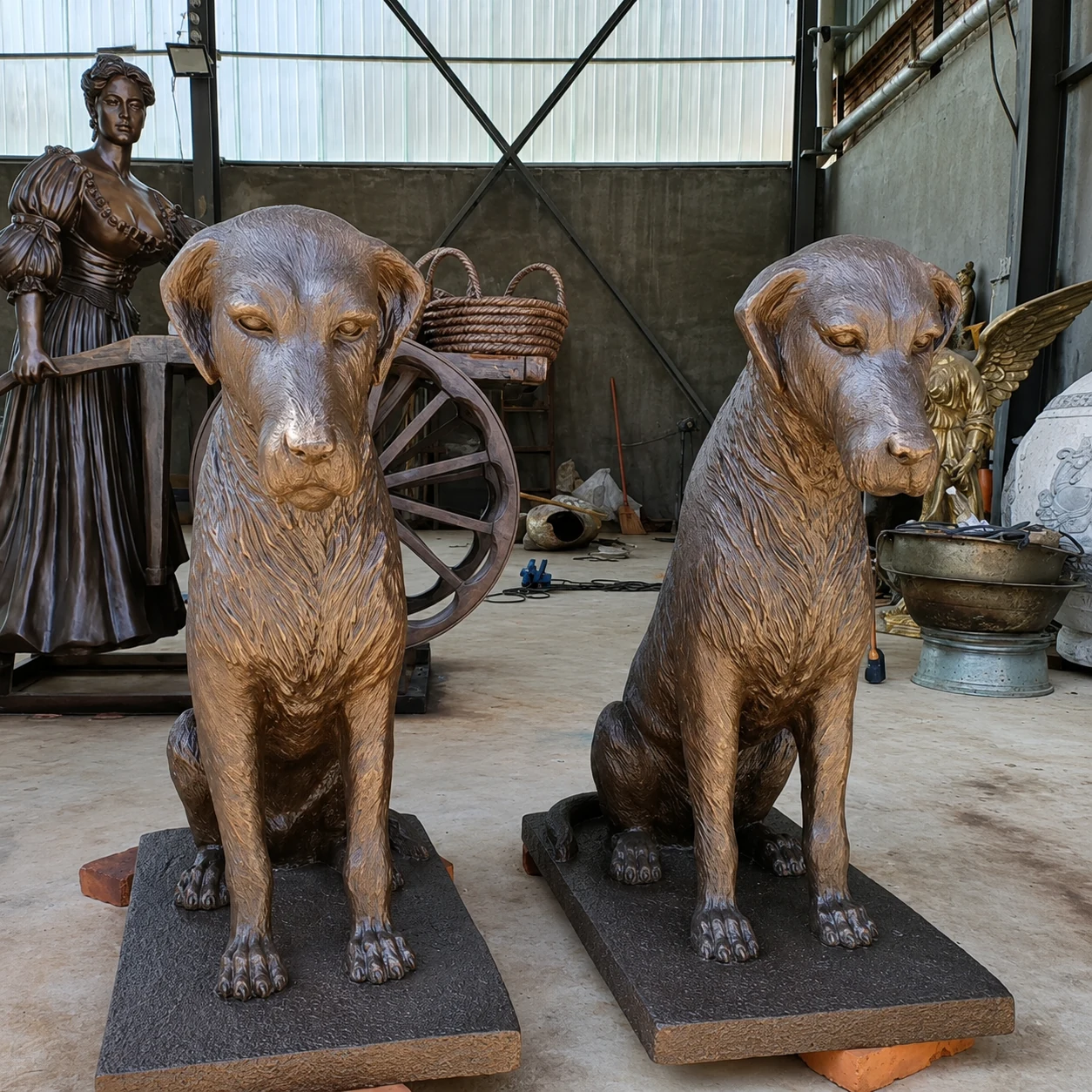
Choose the character
Explore dog statues by breed
The ears, muzzle, body outline and coat all change how a sculpture reads from across a garden. Use these breed directions to begin your selection, then tell us which details belong to your dog.
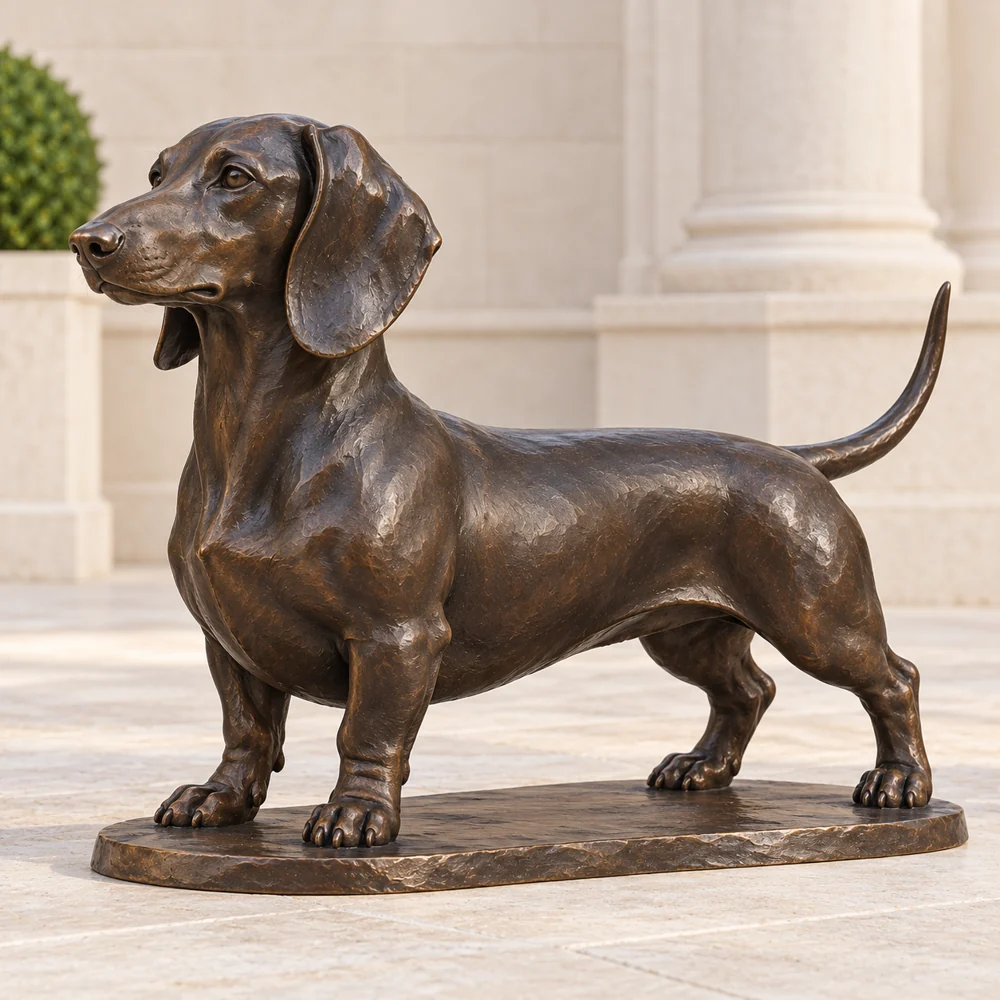
Dachshund / Wiener Dog Statues
A long body needs room from nose to tail. Compare standing and sitting poses, then choose smooth, long or wire coat details.
Explore Dachshund statues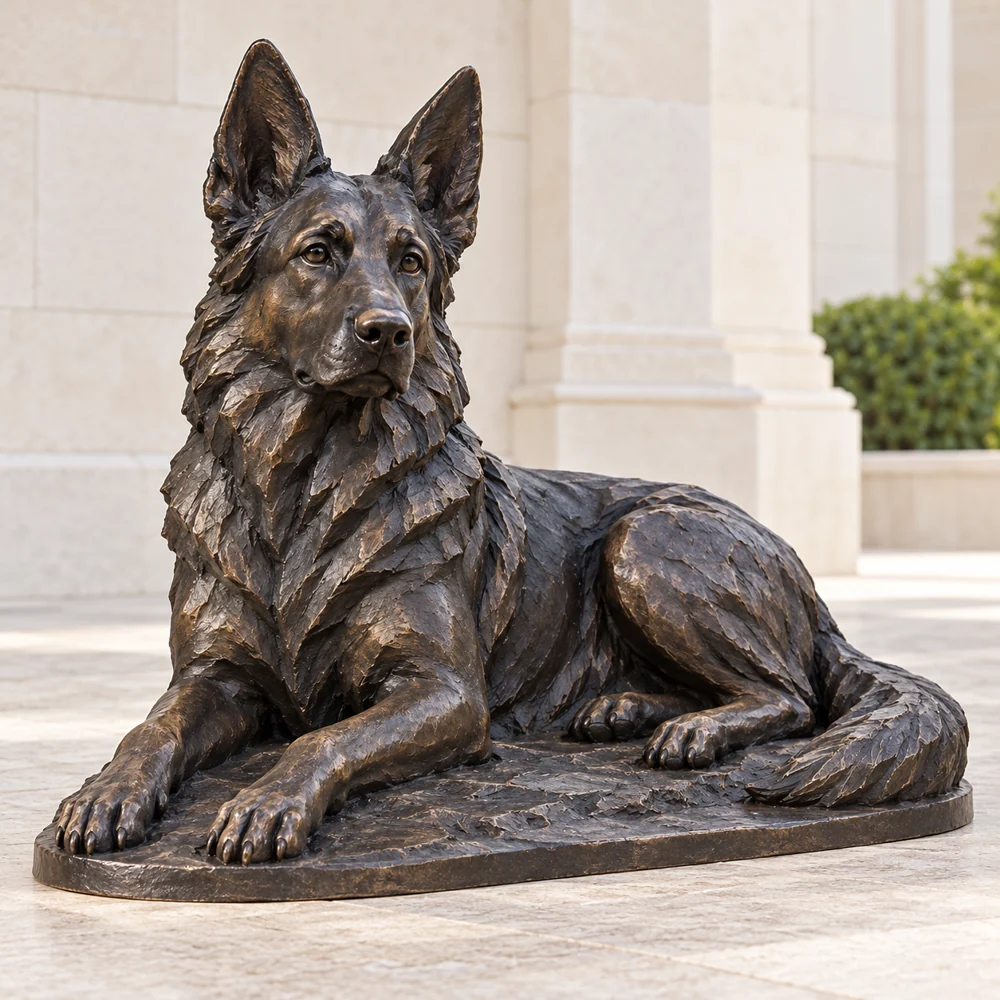
German Shepherd Statues
Choose the back line, coat length and head direction from your own dog. A reclining pose also needs more horizontal space than its height suggests.
Explore German Shepherd statues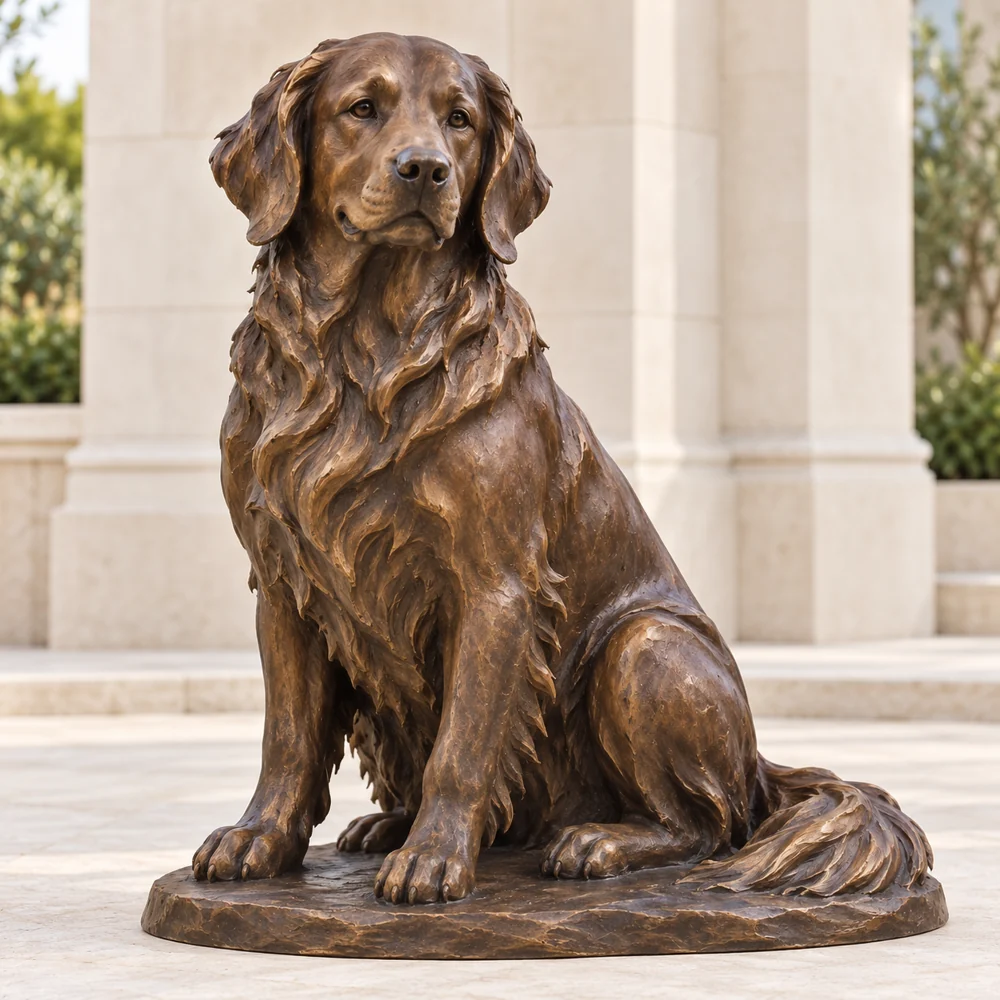
Golden Retriever Statues
Look at the ears, chest feathering and tail before choosing a pose. These features help separate a Golden Retriever portrait from a Labrador silhouette.
Explore Golden Retriever statues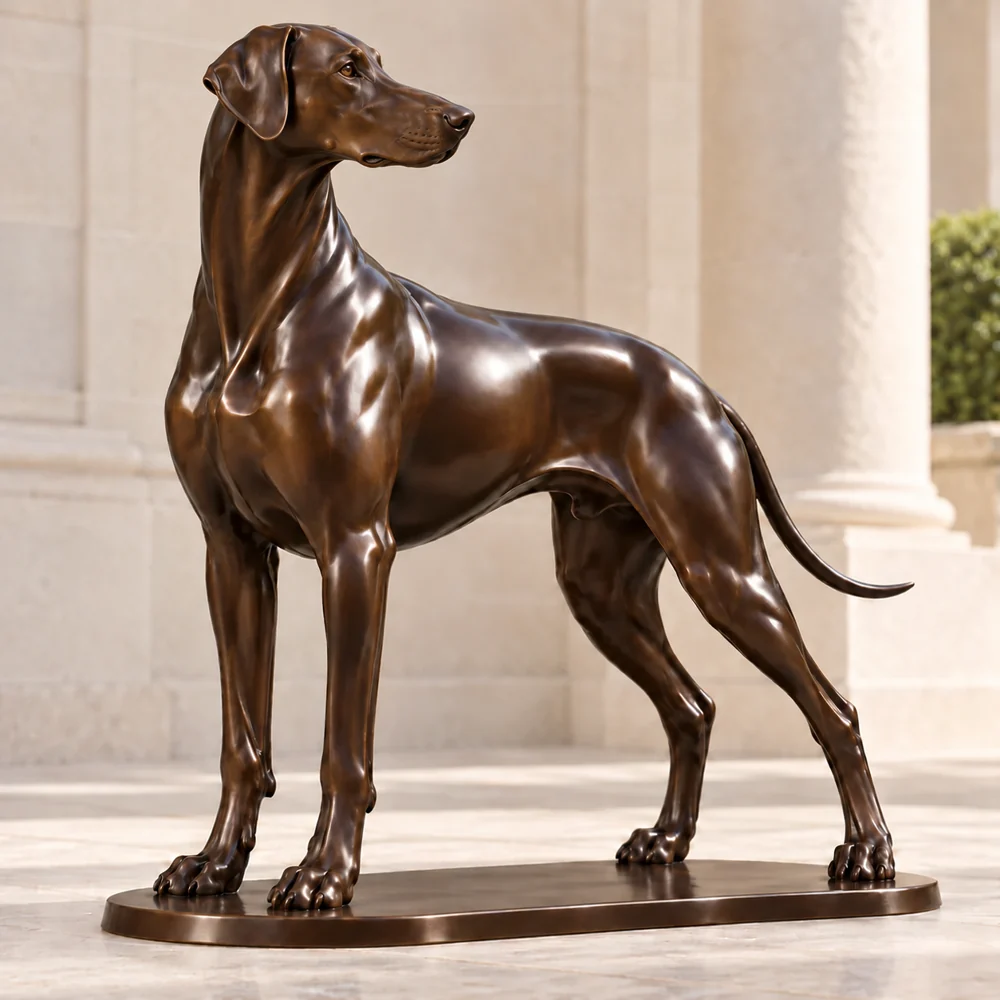
Doberman Statues
Confirm the individual ear and tail shapes, stance and expression. A silver finish is an appearance choice; the underlying material must be specified separately.
Explore Doberman statues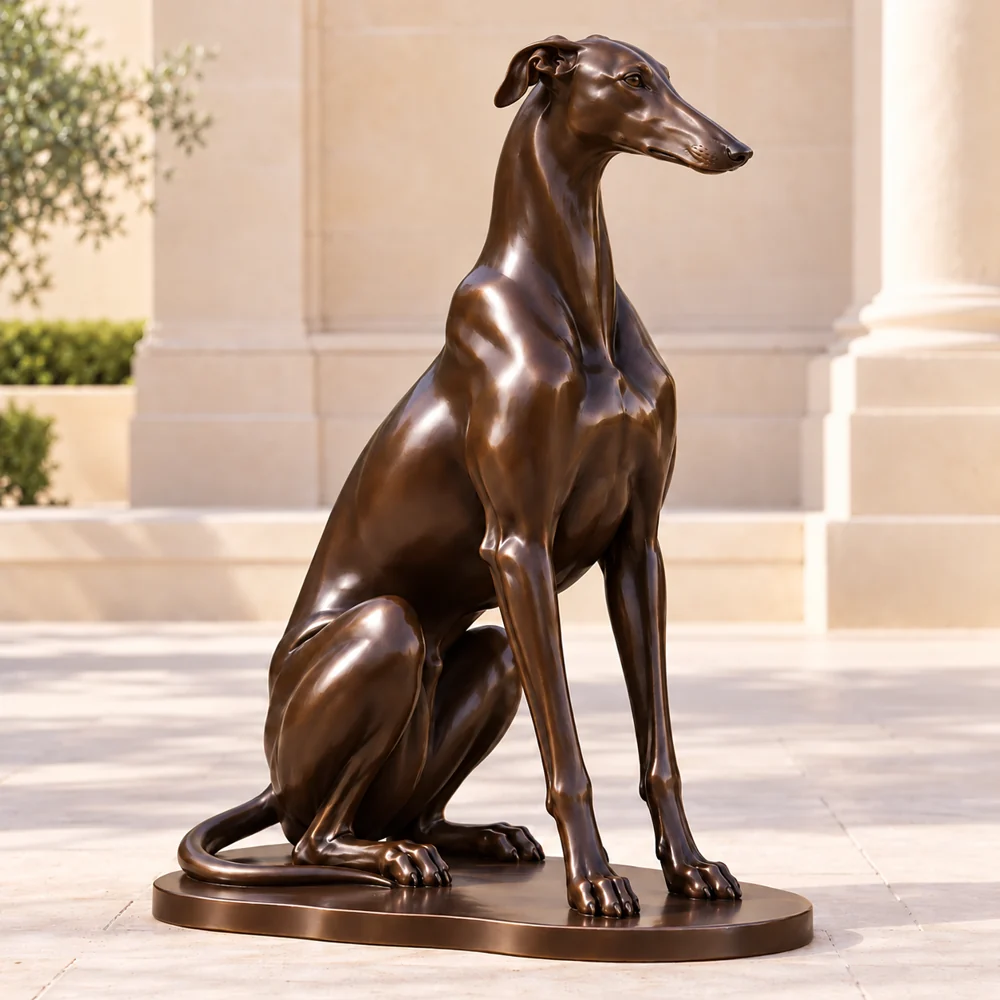
Greyhound Statues
Compare the deep chest, long legs and tail position. Tell us whether you mean a Greyhound or an Italian Greyhound, and whether the piece stands alone or forms a pair.
Explore Greyhound statues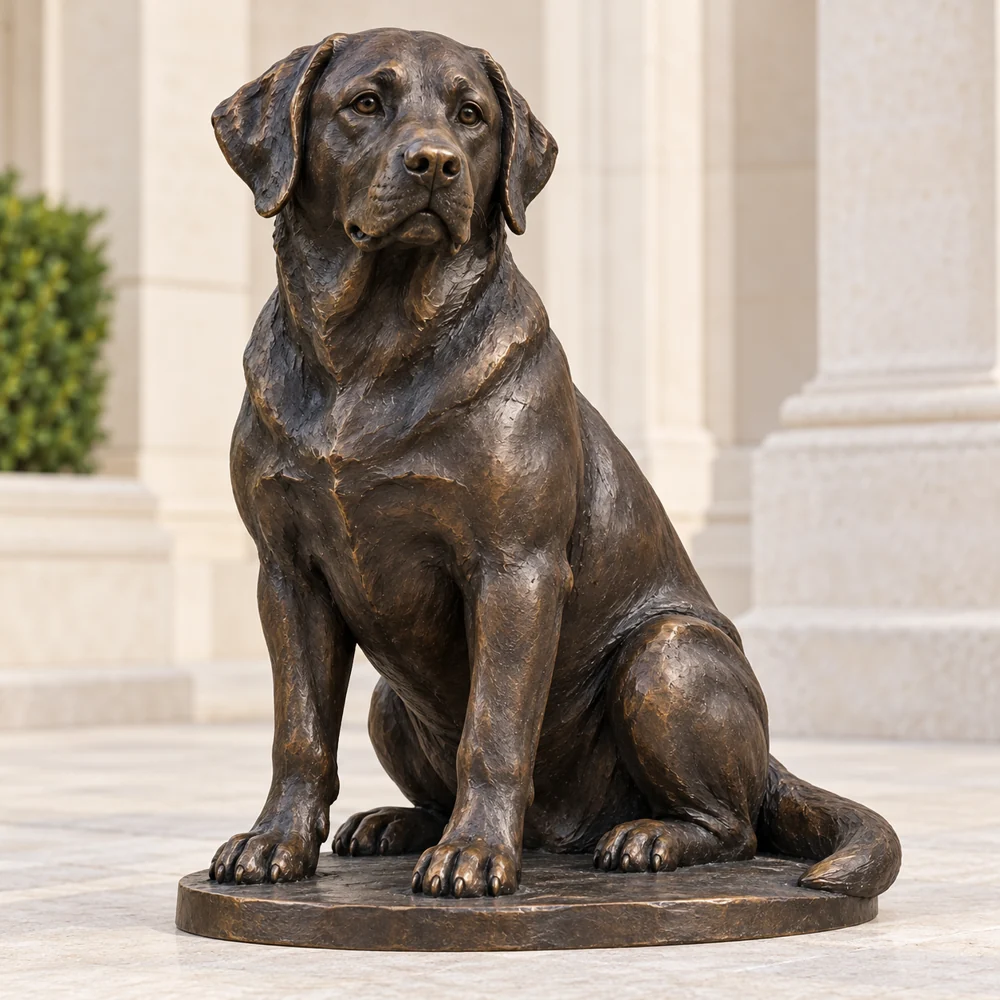
Labrador Statues
A short coat puts more attention on the head, chest and tail. Choose a full-body sculpture or a bust; discuss black patina as a finish rather than a separate material.
Explore Labrador statues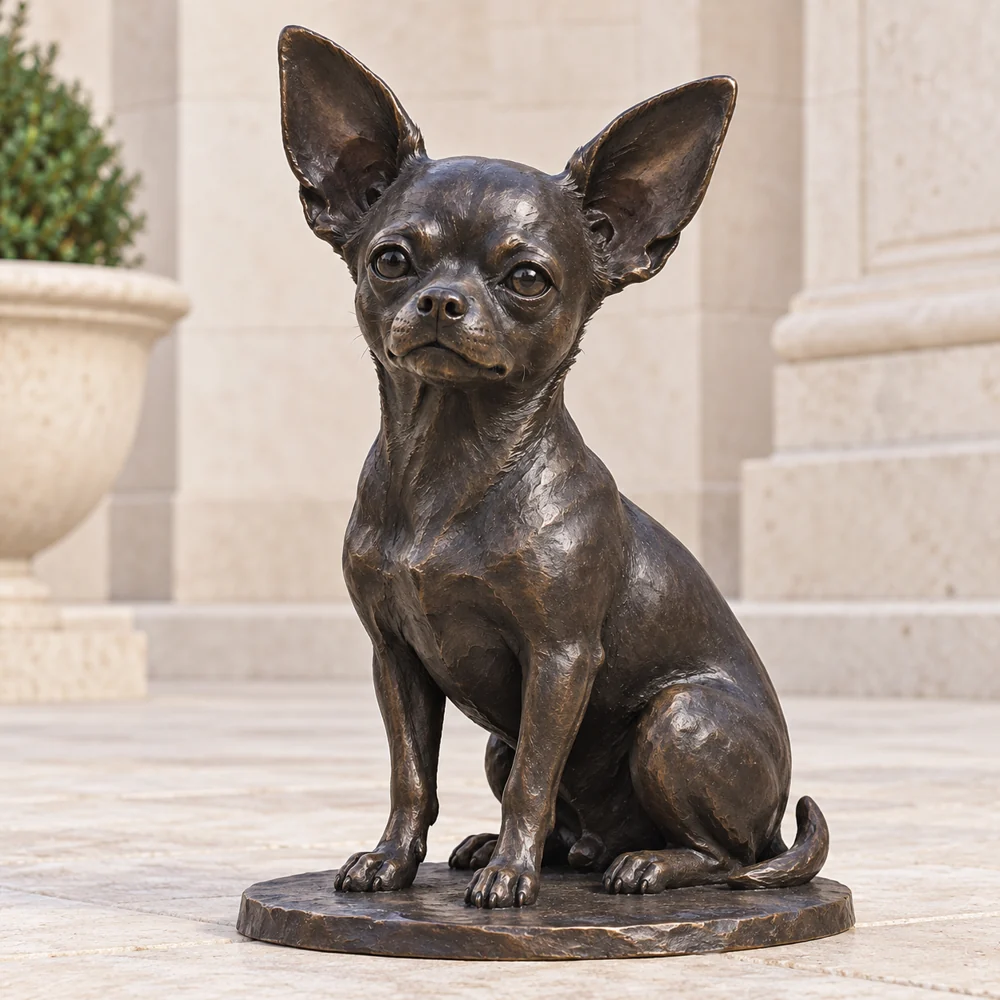
Chihuahua Statues
Life-size may be too small to stand out among plants. Choose a clear viewing position or an enlarged design, while retaining the head and ear proportions.
Explore Chihuahua statues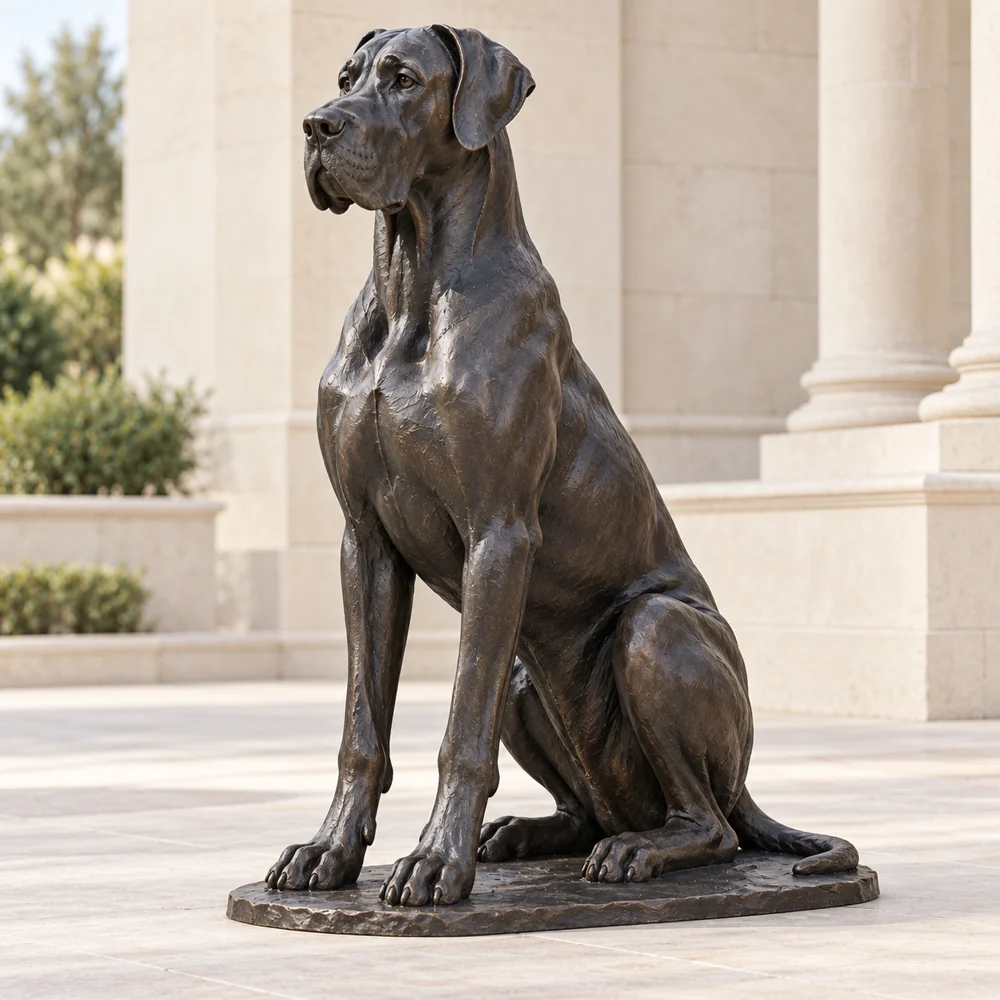
Great Dane Statues
Height is only one measurement. Check the body length, base and passage beside the door, especially when planning two large sculptures.
Explore Great Dane statues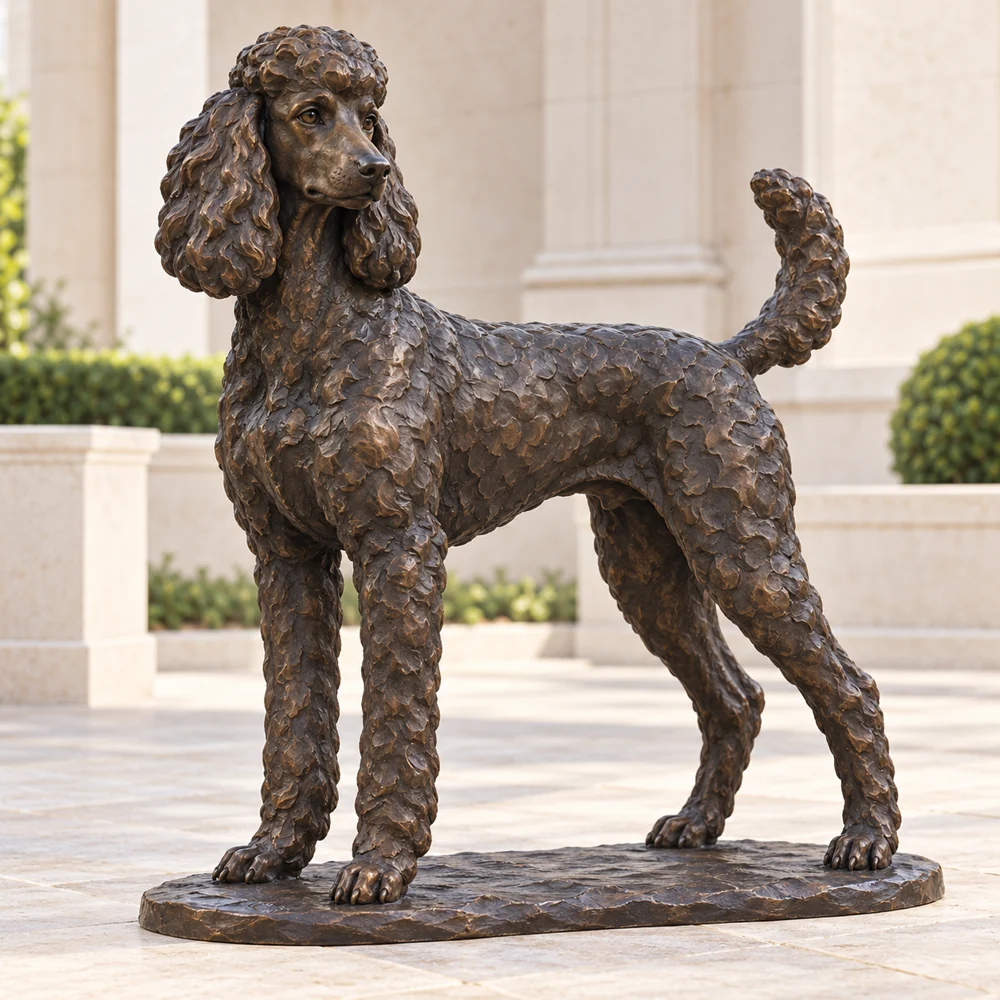
Poodle Statues
Specify standard, miniature or toy proportions and the grooming shape. A recognisable coat outline matters more than covering every surface with tiny curls.
Explore Poodle statues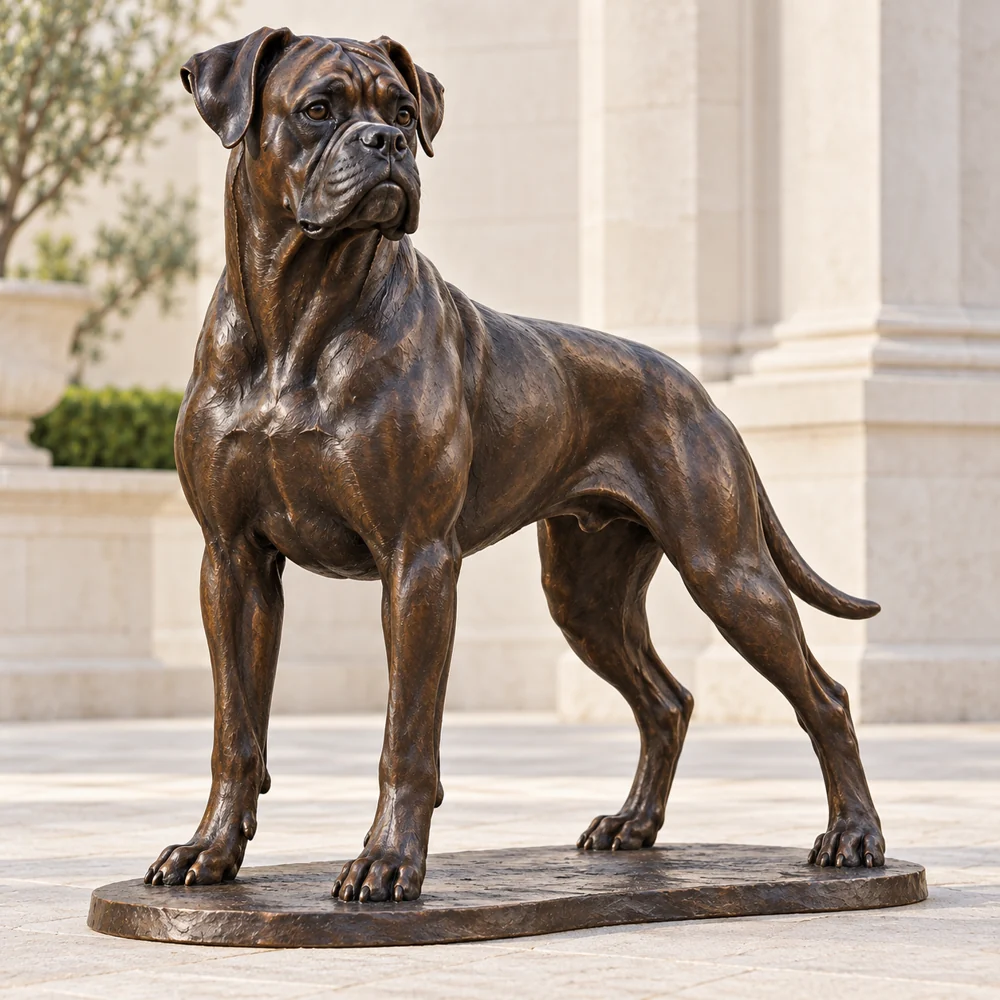
Boxer Dog Statues
Give the muzzle, forehead, chest and ear shape close attention. The portrait should retain your Boxer’s expression and athletic outline.
Explore Boxer dog statues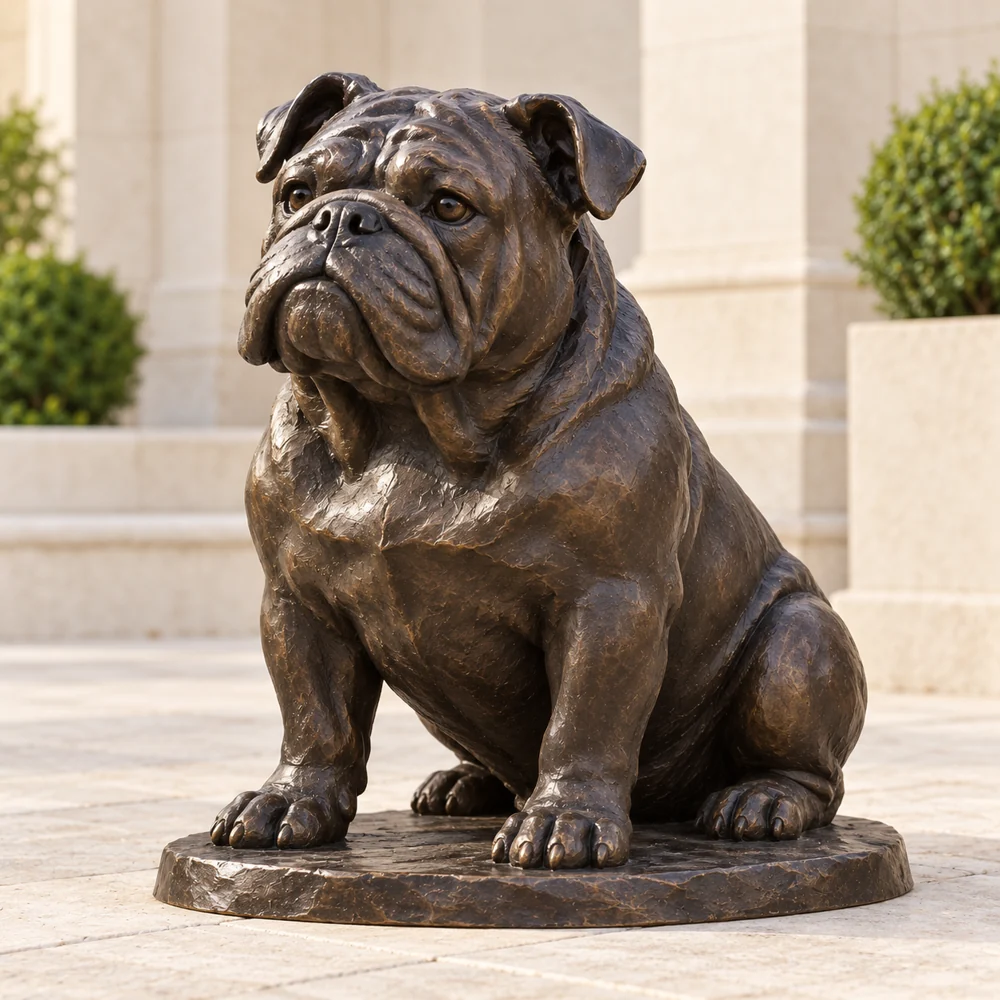
Bulldog Statues
English and French Bulldogs need different head, ear and body proportions. Start with the individual dog, then compare a compact seated pose with a broad standing stance.
Read the Bulldog garden guideYour dog, your starting point
Another breed or a mixed-breed dog?
A breed name is useful, but photographs are more personal. Send the face, side profile and a favourite pose so we can discuss an individual design.
Discuss your dog’s portraitThe breed images are AI design concepts, illustrating possible directions rather than completed commissions. Workshop photographs elsewhere on this page are labelled separately. Images do not establish stock availability, a fixed size or an identical finish for every commission.
Looking for a bronze French Bulldog, a bronze Whippet dog sculpture, a Flat-Coated Retriever statue, a Maltese dog statue or life-size Rottweiler statues? These can begin as individual design enquiries rather than a choice from a fixed catalogue. For a wider comparison of breed outlines, read our breed-specific outdoor dog statue guide.
Beyond the breed name
A custom dog statue from your photographs
A breed sculpture represents a recognisable type of dog. A personalized dog statue starts with an individual: the uneven ear, the shorter muzzle, the relaxed mouth or the way your companion turned their head.
Before choosing material, decide what you most want to recognise. A full-body portrait preserves the stance and silhouette. A dog bust gives the face more attention while using less display space. A relaxed or sleeping pose may suit a quiet memorial; an alert standing pose may suit a garden entrance.
What to send first
- Face and profile photos: front, both sides and, where possible, the back.
- The pose you remember: choose one main position; other photos can help explain details.
- Features to preserve: ears, coat length, muzzle, tail and expression.
- Your display space: a photo of the garden, porch, wall niche or indoor position.
You do not need to solve every choice before contacting us. A few clear photographs and a description of the intended location are enough to begin the discussion. See our personalized dog statue guide for the fuller portrait planning process.
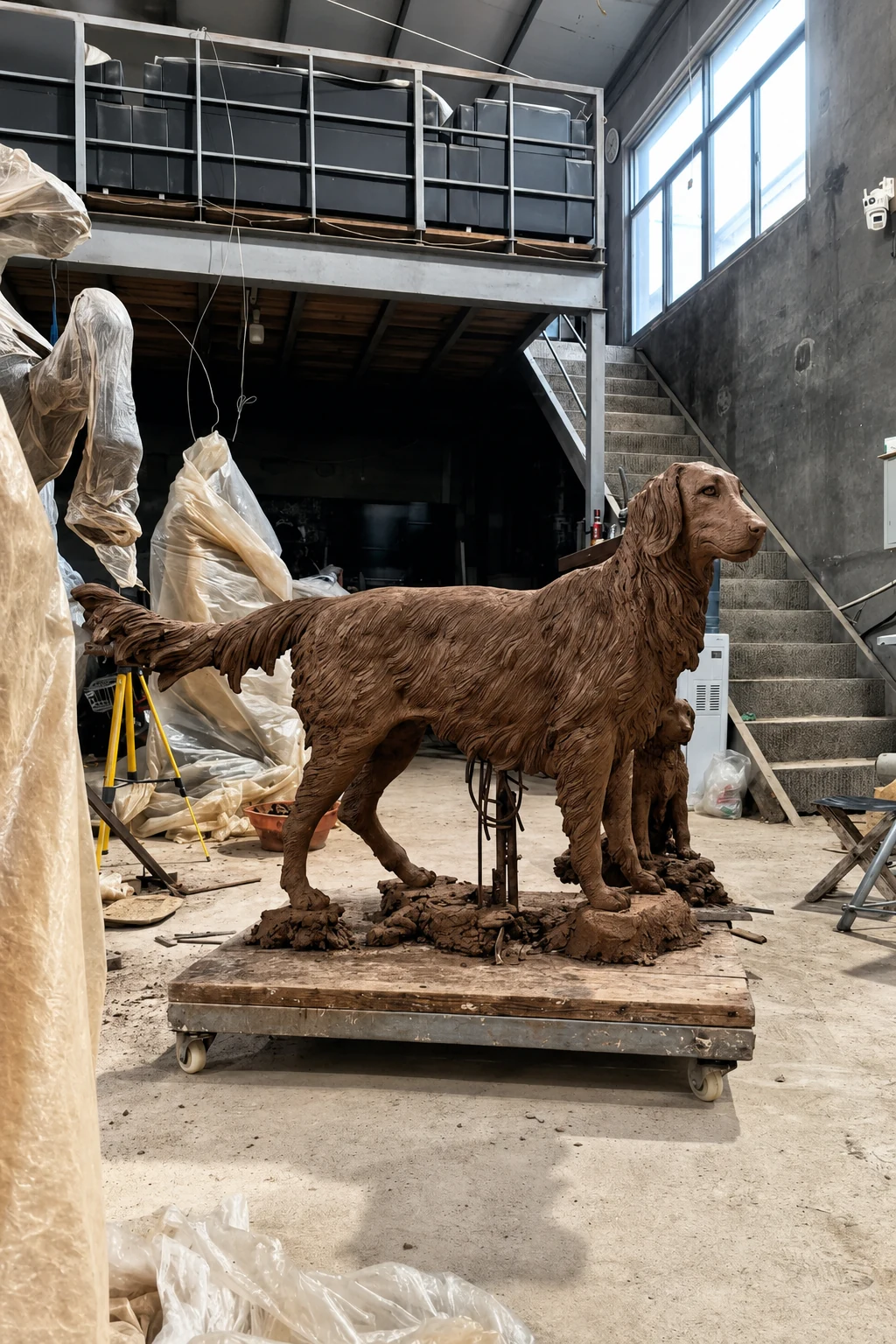
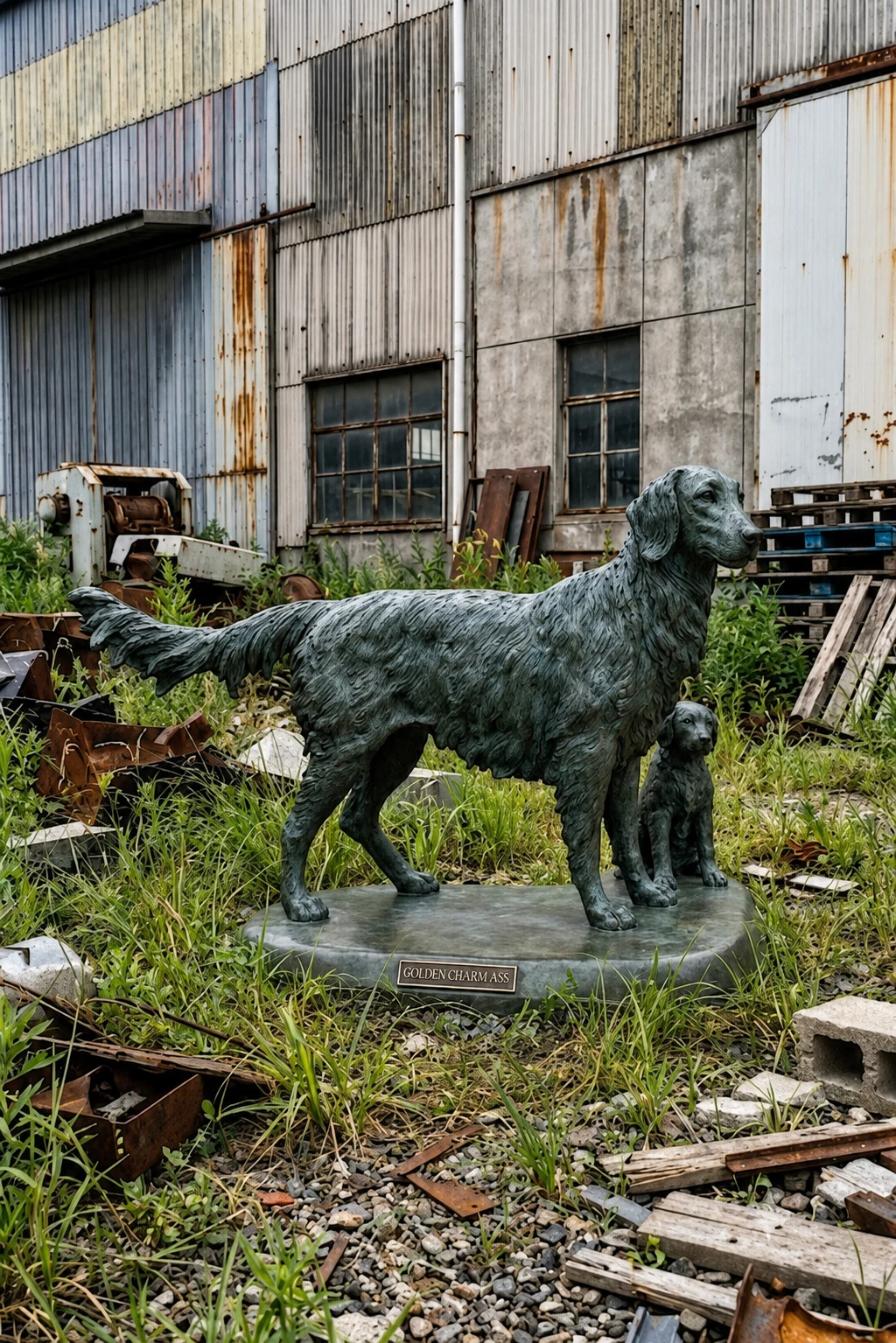
01 · BRIEF
Agree the direction
Describe the dog, pose, material, display position and approximate scale. We discuss the design and the scope of the quotation.
02 · MODEL
Check the likeness
Review the agreed model stage, paying attention to the face, ears, body proportions and how the sculpture reads from more than one angle.
03 · MAKE
Confirm the finish
Manufacture follows the selected material. Surface colour, texture and the base are specified as part of the commission.
04 · DELIVERY
Plan its arrival
Agree packing, shipping destination, unloading access and installation responsibilities for the actual piece.
Material shapes the design
Bronze, marble or stainless steel?
Choose a material for the appearance you want and the way the sculpture will be made. Changing material can require a change in modelling detail, supports and silhouette.
Cast bronze
For expressive, realistic modelling.A bronze dog sculpture can carry facial planes, folds and a considered coat texture. A short coat may use broad, quiet surfaces; a long coat may need stronger grouped strands so the shape remains readable at a distance.
Choose the patina with reference images: deep brown, darker tones or selected warmer highlights. Ask for the appearance to be checked under useful lighting, because a warm highlight does not mean the statue is made from brass.
Outdoor dog bronzes need a care plan suited to the finish and location. Use our bronze sculpture maintenance guide as a starting point, and confirm care for the actual commission.
Natural marble
For a carved, quieter expression.Marble brings the character of the stone into the portrait. Veining, surface finish and the treatment of ears, tail and legs should be considered with the overall form.
Choose the stone and the carving approach together. A delicate bronze detail may need a broader or better-supported interpretation in stone. For an outdoor setting, tell us about rain, frost, irrigation and coastal exposure before selection.
Confirm natural marble in the quotation. Cast stone, concrete and a stone-effect coating describe different products; a white appearance alone does not identify the material.
Stainless steel
For simplified, abstract silhouettes.Our design direction uses large, clean planes or simple curved volumes. The head, ears and body outline convey the breed, with realistic fur, individual toes and tiny facial details left out.
Mirror polishing emphasises reflections; a brushed surface gives a different reading of the form. A silver-looking image is not a material specification: agree the steel grade, finish and environment for the project.
The stainless steel version is designed for its own fabrication method. It should not be treated as the same detailed bronze model with a different colour.
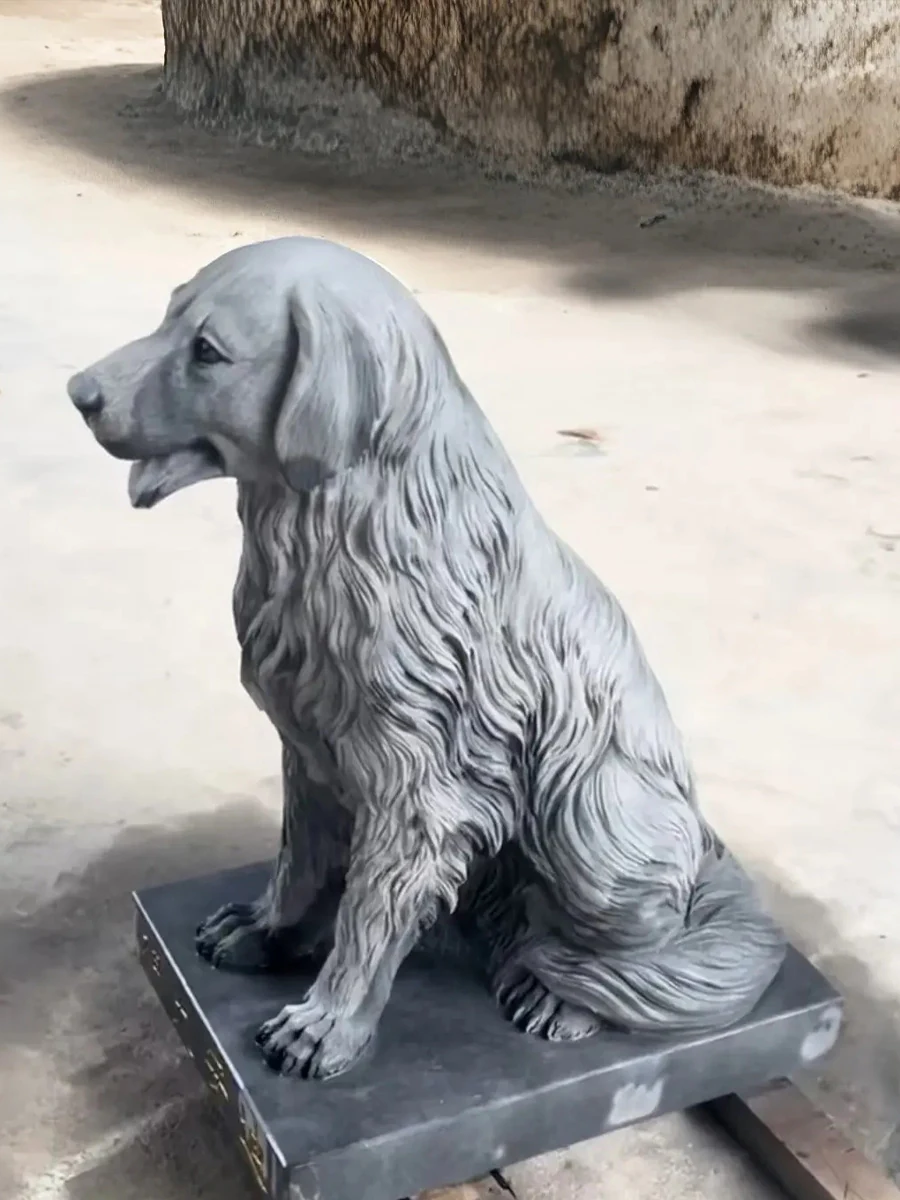
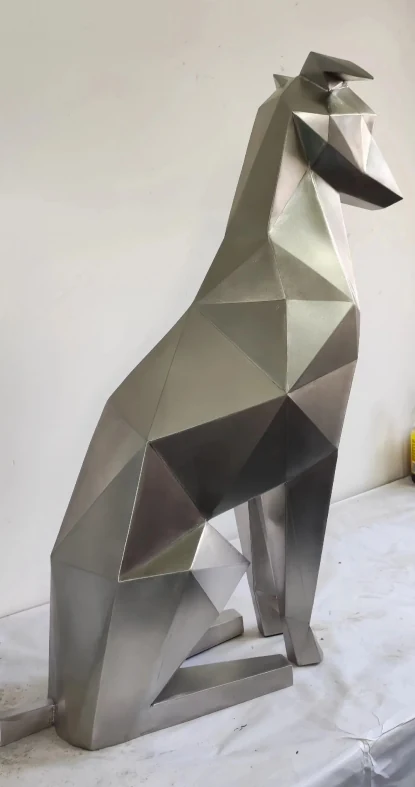
Outdoor suitability depends on the whole design, site and maintenance. The Canadian Conservation Institute’s outdoor-object guidance explains why the base, mounting and protective finishes need attention as well as the sculpture.
A sculptural alternative to a literal portrait
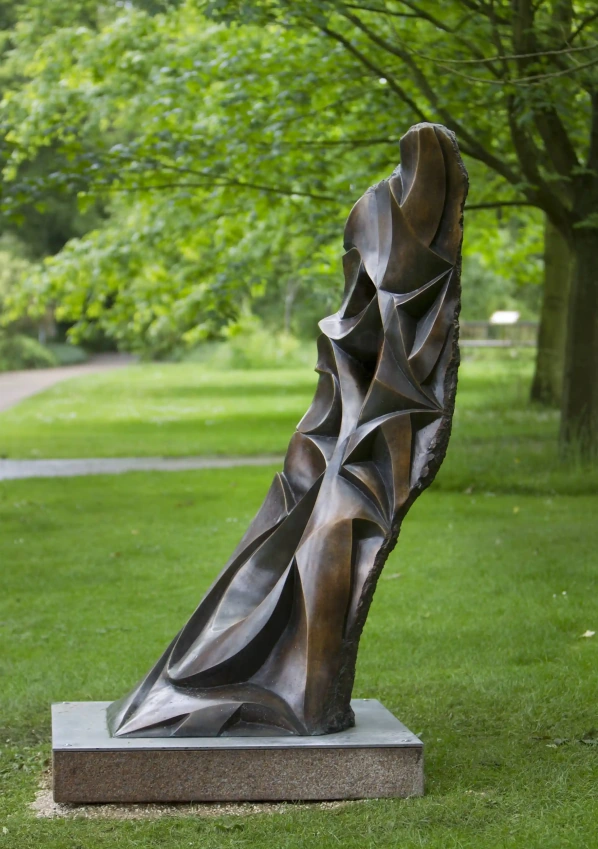
An abstract bronze dog can use flowing planes to establish a different visual character from a detailed pet portrait. This supplied photograph is a real style reference in a garden setting. Choose that artistic direction deliberately, then agree the composition and display scope, rather than treating it as a specimen of one specific dog breed.
Make the scale clear
Life-size dog statues: measure the dog and the space
“Life-size” means the scale of the individual dog being represented, rather than one standard height for a breed. A seated Great Dane, a standing Labrador and a reclining German Shepherd also use their space differently. Ask for the dimensions of the proposed pose before comparing designs.
| Measurement | What to confirm | Why it helps |
|---|---|---|
| Dog reference size | Shoulder height and body length, with the pose identified. | Sets the portrait scale without confusing ear height with shoulder height. |
| Sculpture envelope | Highest point, nose-to-tail length and maximum width. | Includes an upright ear, extended tail or reclining body that may affect clearance. |
| Base dimensions | Base length, width and height; whether it is included. | Reveals the floor or ground area the finished assembly actually occupies. |
| Installed position | Total height with the plinth, viewing direction and nearby planting. | Helps the face remain visible and places the dog at a useful viewing height. |
| Access and support | Delivery route, support surface and confirmed packed dimensions and weight. | Helps plan unloading, handling and installation before the sculpture arrives. |
Original size or enlarged?
A small life-size dog statue may suit a low table or intimate garden position. The same dog placed behind tall flowers can disappear from view. A modest plinth, lower planting or an enlarged sculpture can change that result; preserve the proportions when changing scale.
For life-size bronze dog statues beside a porch, allow for the door swing and the route people actually use. Our front-porch dog statue placement guide explains the space checks in more detail.
One dog or a pair?
A pair is a composition, not simply two copies added to an order. Decide whether both dogs face forward, turn toward each other or have individual poses. Check the combined bases and the space left between them.
For dog lawn statues, also consider the distance from the normal viewing point. A clear head direction and silhouette may have more impact than extra detail that is only visible close up.
Give the sculpture a purpose
For gardens, entrances and pet memorials
A garden companion
A custom dog statue for a garden works best when it can be seen from the places you use: a path, bench, window or patio. Place the head against a simple background and consider how planting changes through the year.
An entrance sculpture
Choose a welcoming, alert or quiet pose to suit the doorway. Keep the passage usable, check the support below the base and decide how a visitor sees the face when approaching.
A personal memorial
A familiar posture can matter more than a formal pose. Discuss a name, dates or a separate plaque as part of the design. Our custom pet memorial statue guide explores the planning choices; pet memorial stones provide another route.
An ashes compartment, fountain outlet or other functional feature needs its own design confirmation. Share the requirement at the beginning so it can be included in the scope.
A real entrance-setting reference
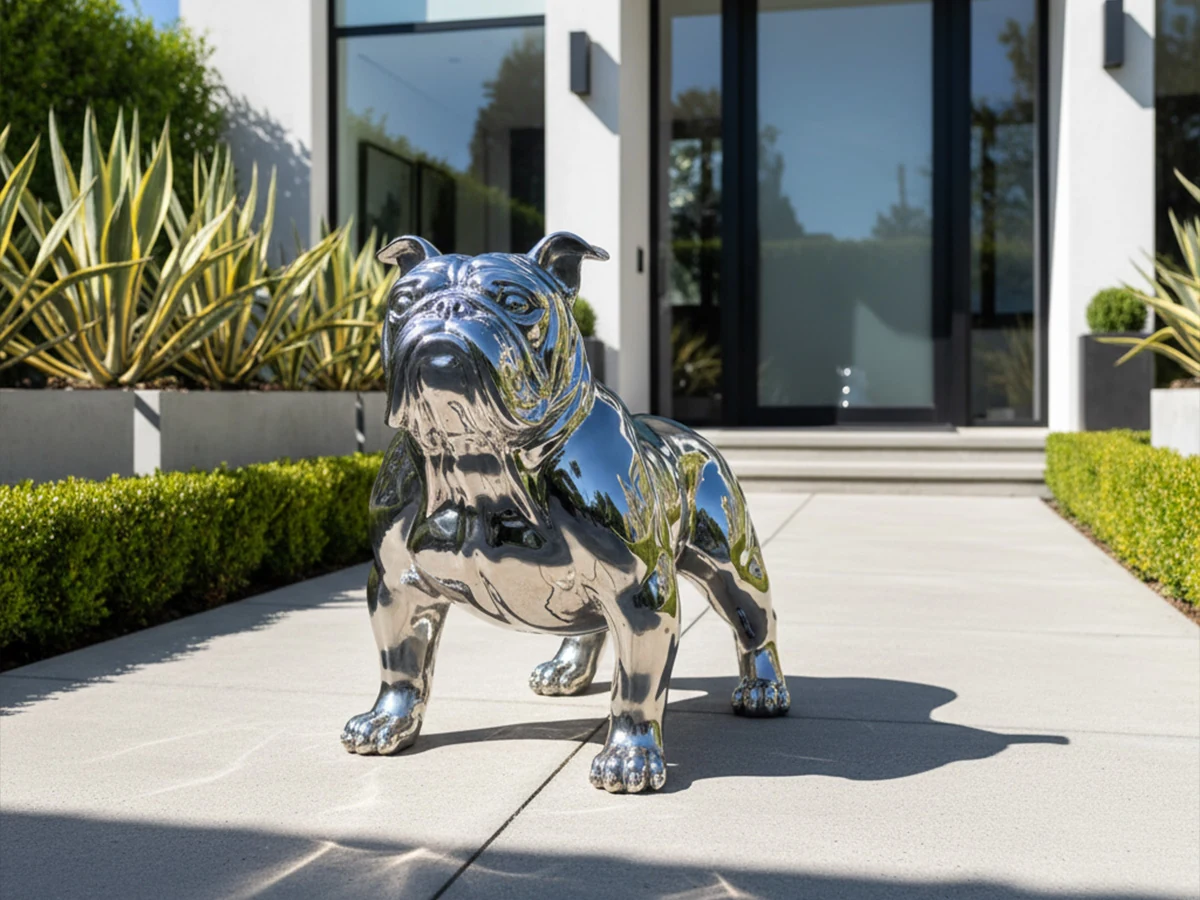
This supplied photograph shows a mirror-steel dog against paving, planting and an entrance. It can help you describe the setting and reflective effect you prefer. Your sculpture size, clearances and fixing still need their own site information; the photograph is not a dimensioned installation plan or a claim about a particular customer location.
Before you commission
Dog statue questions
Can you make a statue of my own dog rather than a standard breed figure?
Yes, an individual custom dog sculpture can begin with your photographs. Tell us which pose and features matter most. The model review is the point to check the likeness and proportions against those references; it is not a guarantee that any single photograph reveals every detail.
Do you have life-size dog statues for sale, or is everything made to order?
This page presents directions for custom commissions. Ask about the current availability of a specific design if you have a reference image. A photograph does not confirm an existing mould, stock item or fixed production schedule. Life-size, material and finish are agreed for the actual sculpture.
What affects the price of a bronze dog statue?
Scale, the model work, coat treatment, pose, base, surface finish and the number of figures affect the scope. A new individual portrait and an adaptation of an available design may involve different work. Ask the quotation to separate the sculpture, any base or plaque, packing, freight and the delivery terms; confirm local charges and installation responsibilities for the destination.
Can a full-body portrait be changed to a dog bust?
A bust concentrates on the head, neck and upper chest. It may suit a shelf, pedestal or smaller memorial position, but it still needs a stable display base and sufficient reference photographs. Choose the expression and the lower edge of the bust before agreeing the design.
Can a bronze dog sculpture look like a black or golden-coated dog?
Discuss dark or warmer patina directions with finish references. Coat colour in a photograph and colour on bronze do not behave in the same way under changing light. Agree which appearance matters most, rather than assuming an exact painted colour match. A golden surface also does not make bronze the same material as brass.
Will an outdoor bronze statue change colour?
Outdoor exposure can change a bronze surface over time, including the development of green patina. The result depends on the finish, environment and care. Discuss the protective treatment and maintenance for your location; cleaning or renewing a coating is different from guaranteeing that a patina never changes.
How is a large garden dog statue secured?
The fixing approach depends on the sculpture, base and support surface. Share photographs and describe whether the position is paving, a concrete plinth, decking or soil. Agree mounting details and local installation responsibility before manufacture; Agree whether mounting brackets, rods or other fixings suit the actual piece and support. Weight alone is not an installation plan or a theft guarantee.
Can I order a breed that is not pictured here?
Send the breed name and photographs, including mixed-breed dogs. A French Bulldog bronze portrait needs its own ear and head treatment; a Whippet, Flat-Coated Retriever, Maltese or Rottweiler also needs its own proportions. We can discuss a full-body figure, a bust and the intended setting without assuming a stocked model exists.
What if I have only a few old photographs?
Send what you have and identify the features you remember clearly. Different photographs may help with the face, body and tail separately. Missing views should be discussed before modelling so you understand which details have reliable references and which require interpretation.
How long will a custom dog statue take?
The schedule depends on model work, review time, material, fabrication and shipping. Share any event date when enquiring. Ask for the production and transport stages to be stated separately once the design, destination and scope are agreed.
Can you make a Chinese Foo Dog or guardian lion pair?
Chinese Foo Dogs are stylised guardian lions, a separate direction from realistic pet portraits. Explore our Foo Dog statue pairs and placement guide. Agree the design, material, pair arrangement and entrance dimensions before ordering.
Can a pet memorial dog statue have angel wings?
Angel wings can be discussed as a custom memorial feature. Send a reference for their size and position: folded wings create a different silhouette from spread wings and require different clearances. Confirm how they join the figure, how the sculpture is supported and whether the additions preserve your dog’s recognisable posture during model review.
Can a dog statue be used as a grave marker or include ashes?
A dog sculpture can be planned as a memorial with a name, dates or a separate plaque. An ashes compartment requires a separately agreed design, including capacity, access, closure and intended location. For a cemetery installation, confirm the site’s rules on dimensions, materials and fixing before committing to the sculpture. See our pet memorial statue guide for the planning choices.
What is the difference between a resin dog statue and a cast bronze dog?
Resin and cast bronze suit different budgets, weights and display requirements. A resin composite can be easier to move, while its outdoor suitability depends on its formulation, finish and manufacturer’s care guidance. Bronze offers a metal surface with patina options, but also needs an agreed finish, suitable support and ongoing care. Compare the actual dimensions, material specification, outdoor guidance, repair options and delivered cost rather than assuming every resin figure fails or every bronze figure is maintenance-free.
Can you make a mirror-polished stainless steel balloon dog?
A balloon dog is a simplified, abstract direction rather than a realistic breed portrait. Discuss the outline, scale, stainless steel specification and mirror-polished or coloured finish as a separate design brief. Broad forms are more suitable than transferring detailed bronze fur into stainless steel. Explore our stainless steel sculpture options; the colour reference and fabrication scope need confirmation before production.
Start with what you know
Tell us about your dog and its future home
Send your favourite photographs, a breed or design reference, and a picture of the place where the sculpture will stand. If you are unsure about size or material, explain what you want to see from that position.
We can then discuss a custom dog statue around a clear brief, rather than asking you to choose every technical detail on your own.
Useful details for the enquiry
- Breed or photographs of your own dog.
- Preferred pose and features to preserve.
- Approximate size, or the available display space.
- Bronze, marble or a simplified stainless steel direction.
- Indoor or outdoor setting, destination and any target date.
A starting budget can help compare scale and design options. You can leave it open while discussing the first direction.